
Spain is about to experience one of its most exciting astronomical events in decades. On 12 August 2026, a total solar eclipse will cross parts of the country, drawing visitors from around the world.
If you’re planning a trip to Andalusia, though, there’s one important detail to understand before you start booking hotels and plotting viewing locations.
The 2026 eclipse will not be total in Andalusia.
That might sound disappointing at first, but it doesn’t mean southern Spain should be ruled out. Much of Andalusia will still experience a remarkably deep partial eclipse, with more than 90% of the Sun obscured in many areas. Combined with the region’s beaches, historic cities and summer atmosphere, it could still be a memorable place to witness the event.
The key question is whether you’re travelling for the eclipse itself or whether the eclipse is part of a wider Andalusia holiday. If you’re hoping to experience totality, you’ll need to travel elsewhere in Spain. If you’re already planning an Andalusia trip, however, the eclipse could become one of the highlights of your holiday.
For a complete overview of Spain’s upcoming eclipses, including why 2027 and 2028 are especially exciting for southern Spain, see our guide to the solar eclipses in Andalusia.
DISCLOSURE: This page contains affiliate links. If you make a purchase via one of those links, we will earn a commission at no extra cost for you.
Accuracy note: Eclipse dates, visibility areas and safety advice in this guide have been checked against official Spanish eclipse information. Before booking your final viewing spot, always confirm the exact path, timing and local guidance for your chosen location.

Quick Answer: Is Andalusia a Good Place for the 2026 Eclipse?
Yes – if you’re looking for a fantastic summer trip that happens to include a dramatic eclipse.
No – if your main goal is experiencing totality.
That’s the simplest way to put it.
From Andalusia, you’ll still see an impressive celestial event. In much of the region, the Moon will cover more than 90% of the Sun, creating unusual lighting conditions and a noticeably different atmosphere. You’ll experience the anticipation, the gradual darkening of the landscape and the sense that something extraordinary is happening overhead.
What you won’t experience is totality itself.
The path of totality stays farther north and east in Spain, which means the Sun never becomes completely covered when viewed from Andalusia. If seeing the corona and witnessing the brief darkness of a total eclipse is at the top of your travel wish list, you’ll need to head elsewhere.
For many visitors, however, Andalusia still makes perfect sense. You can spend your holiday exploring whitewashed villages, relaxing on Mediterranean beaches, discovering historic cities and enjoying some of Spain’s best food – with a major eclipse added to the itinerary.
2026 Solar Eclipse in Spain at a Glance
| Detail | Information |
|---|---|
| Date | 12 August 2026 |
| Eclipse type | Total solar eclipse |
| Visibility from Andalusia | Deep partial eclipse |
| Totality in Andalusia | No |
| Sun coverage in much of Andalusia | More than 90% |
| Best source for exact visibility | Official eclipse trajectory viewer |
While the eclipse crosses parts of northern and eastern Spain as a total eclipse, Andalusia remains outside the path of totality.
That distinction is important because even a very deep partial eclipse is visually different from a total eclipse. The exact percentage of coverage and viewing times vary depending on where you are, so it’s worth checking the official eclipse trajectory viewer before finalising your plans.
Coverage varies across Andalusia, so exact eclipse percentages and timings will depend on your location. Always check the official eclipse trajectory viewer before making final plans.
What You’ll See From Andalusia
Even without totality, the eclipse could still be one of the most memorable moments of a summer trip to southern Spain.
As the Moon gradually moves across the Sun, daylight will begin to feel different. The change isn’t like a sunset or a storm rolling in. Instead, the light often becomes strangely muted and unnatural, almost as though someone has subtly adjusted the brightness of the world around you.
In much of Andalusia, where more than 90% of the Sun will be covered, you may notice temperatures falling slightly and shadows becoming unusually sharp. The landscape can take on a surreal appearance, and many people describe a feeling that something is “off” even before they consciously notice the eclipse itself.
It’s an experience that’s difficult to explain until you’ve seen it.
At the same time, it’s worth being realistic about expectations. From Andalusia, the Sun never becomes completely covered. You won’t see the solar corona, experience true eclipse darkness or witness the dramatic transition that occurs inside the path of totality.
That’s why eclipse enthusiasts often travel long distances to reach the total eclipse path. A 90% eclipse sounds close to 100%, but the viewing experience is fundamentally different.
Still, for travellers already visiting southern Spain, the eclipse promises to be a fascinating and memorable event.
Should You Travel to Andalusia for the 2026 Eclipse?
You absolutely could – especially if Andalusia is already on your travel wish list.
The 2026 eclipse offers something slightly different here than it does elsewhere in Spain. Rather than travelling specifically for totality, you’re combining a major astronomical event with one of Europe’s most rewarding summer destinations.

You might spend the morning exploring Granada’s historic streets, relax on the beach near Málaga during the afternoon, and then watch the eclipse unfold as the day progresses. The event becomes part of a broader travel experience rather than the sole reason for making the journey.
For many visitors, that’s an attractive balance.
However, if your dream is to experience a true total solar eclipse, Andalusia should not be your final viewing destination. The most dramatic eclipse effects occur inside the path of totality, and that path does not cross southern Spain.
The best way to think about Andalusia in 2026 is as a beautiful holiday destination that happens to offer an exceptional partial eclipse. If totality is your priority, you’ll want to plan additional travel elsewhere in Spain.
Travellers interested in future eclipses should also know that Andalusia plays a much larger role in the eclipses of 2027 and 2028.
Where to Base Yourself in Andalusia for the 2026 Eclipse
One advantage of staying in Andalusia is that you don’t need to chase a specific location to enjoy the eclipse. Since the region sits outside the path of totality, choosing where to stay is more about the kind of trip you want than finding the perfect viewing point.
Málaga is likely to be one of the most popular choices. The city combines beaches, excellent transport connections and a wide range of accommodation options, making it an easy base for visitors arriving from elsewhere in Europe.
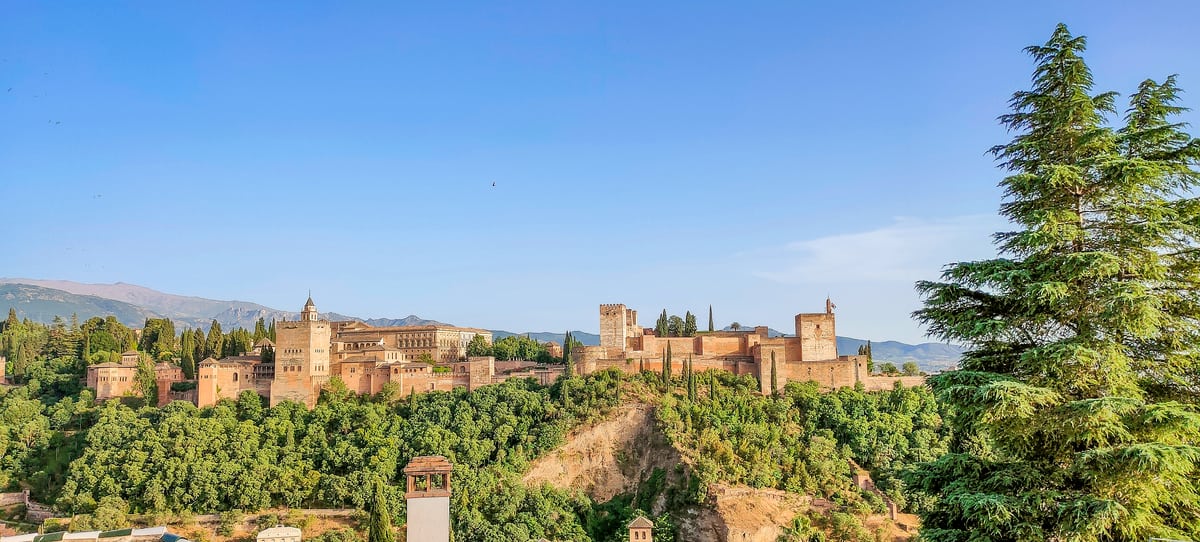
Granada offers a very different atmosphere. Watching the eclipse during a trip that also includes the Alhambra and the foothills of the Sierra Nevada has obvious appeal for travellers interested in history and culture.
Seville and Córdoba are excellent choices if your focus is architecture, food and Andalusian heritage, although August temperatures can be intense. If you’d rather spend your holiday by the sea, Cádiz and the Costa de la Luz provide a more relaxed coastal experience.
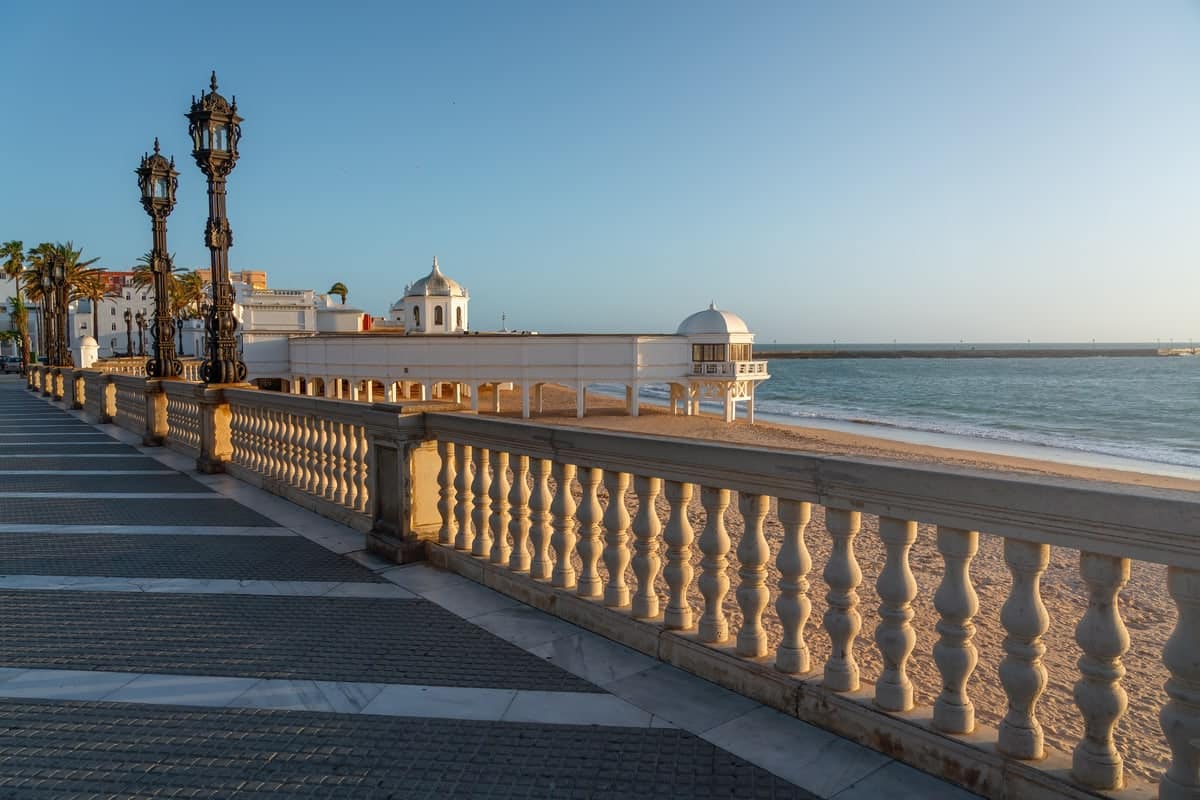
Ultimately, the best place to stay isn’t necessarily the place with the highest eclipse percentage. It’s the destination that fits the holiday you want to have.
Check accommodation options across Andalusia (affiliate link).
Should You Travel From Andalusia to the Path of Totality?
For some travellers, the ideal solution may be to do both.
You could spend most of your holiday in Andalusia and then travel to the path of totality for eclipse day itself. That approach allows you to enjoy southern Spain while still experiencing the eclipse at its most dramatic.
If you’re planning to combine Andalusia with a viewing location elsewhere in Spain, having your own transport can make the journey much more flexible.
Compare car rental options across Spain (affiliate link).
If you’re considering this option, planning ahead will be essential. Hotels, transport and rental cars may all be in higher demand than usual.
Before making any decisions, always check the official eclipse trajectory viewer to confirm whether your chosen location lies inside the path of totality.
Practical Travel Tips for August 2026
August is already one of Spain’s busiest travel months, and the eclipse is likely to increase demand even further.
If you’re visiting Andalusia, prepare for serious summer heat. Inland cities such as Seville and Córdoba regularly see temperatures above 40°C, while coastal destinations remain busy throughout the holiday season. Carrying water, seeking shade and avoiding long periods in direct sun will make your trip much more comfortable.
It’s also worth booking accommodation and transport well in advance. Even travellers with no interest in astronomy will be holidaying in Spain during August, and the eclipse may place additional pressure on availability.
If you plan to travel toward the path of totality, avoid relying on last-minute arrangements. Major eclipses often create unexpected traffic congestion both before and after the event.
Finally, remain flexible. Weather conditions, haze or smoke can occasionally affect visibility, and having a backup viewing location is never a bad idea.
Responsible Eclipse Travel
The August eclipses fall during Spain’s highest wildfire-risk season. If you’re watching from rural, coastal or mountainous viewpoints, follow local restrictions, avoid open flames, don’t smoke in natural areas, never park on dry grass, stay on marked paths, don’t climb on monuments or fragile structures, and take your rubbish with you.
Responsible travel helps protect the landscapes that make Andalusia such a special place to visit.
How to Watch the Eclipse Safely
Viewing a partial eclipse safely is straightforward, but proper eye protection is essential.
Use certified eclipse glasses designed specifically for solar viewing. Regular sunglasses, however dark they may seem, are not safe for looking at the Sun. Homemade filters should also be avoided.
If you’re travelling with children, make sure they understand when and how to use eclipse glasses correctly.
Be especially careful with cameras, binoculars and telescopes. Never look at the Sun through any optical device unless it has a proper professional solar filter fitted to the front of the lens. Eclipse glasses alone are not enough when using magnifying equipment.
Suggested 2026 Eclipse Itinerary Ideas
One of the easiest ways to enjoy the eclipse is simply to build it into a classic Andalusia holiday. Spend time exploring cities such as Málaga, Granada and Seville, then enjoy the eclipse as a memorable highlight of the trip.
If seeing totality is important to you, consider dividing your holiday between Andalusia and central Spain. This allows you to enjoy the region while still travelling to the total eclipse path on 12 August.
Another option is to combine Andalusia with destinations farther east, creating a broader Spain road trip that incorporates eclipse viewing along the way.
Quick Questions About the 2026 Eclipse From Andalusia
Will the 2026 eclipse be total in Andalusia?
No. Andalusia will experience a deep partial eclipse, not totality.
How much of the Sun will be covered?
In much of Andalusia, more than 90% of the Sun will be obscured.
Is Málaga in the path of totality?
No. Málaga will experience a deep partial eclipse but is outside the total eclipse path.
Where in Spain can you see totality?
The path of totality crosses parts of northern and eastern Spain. Always check the official eclipse trajectory viewer before making travel plans.
Do I need eclipse glasses in Andalusia?
Yes. Proper solar viewing protection is required during all partial phases of the eclipse.
Final Thoughts
The 2026 solar eclipse may not bring totality to Andalusia, but that doesn’t mean southern Spain should be overlooked.
You’ll still experience one of Europe’s most significant eclipse events from a region known for spectacular coastlines, historic cities, outstanding food and unforgettable road trips. For many travellers, that’s more than enough reason to visit.
If your goal is to witness a true total solar eclipse, you’ll need to travel elsewhere in Spain. But if you’re looking for a memorable summer holiday with an extraordinary celestial event thrown into the mix, Andalusia remains a compelling choice.
And if you’re already thinking ahead, the eclipses of 2027 and 2028 could be even more exciting for travellers focused on Andalusia.