
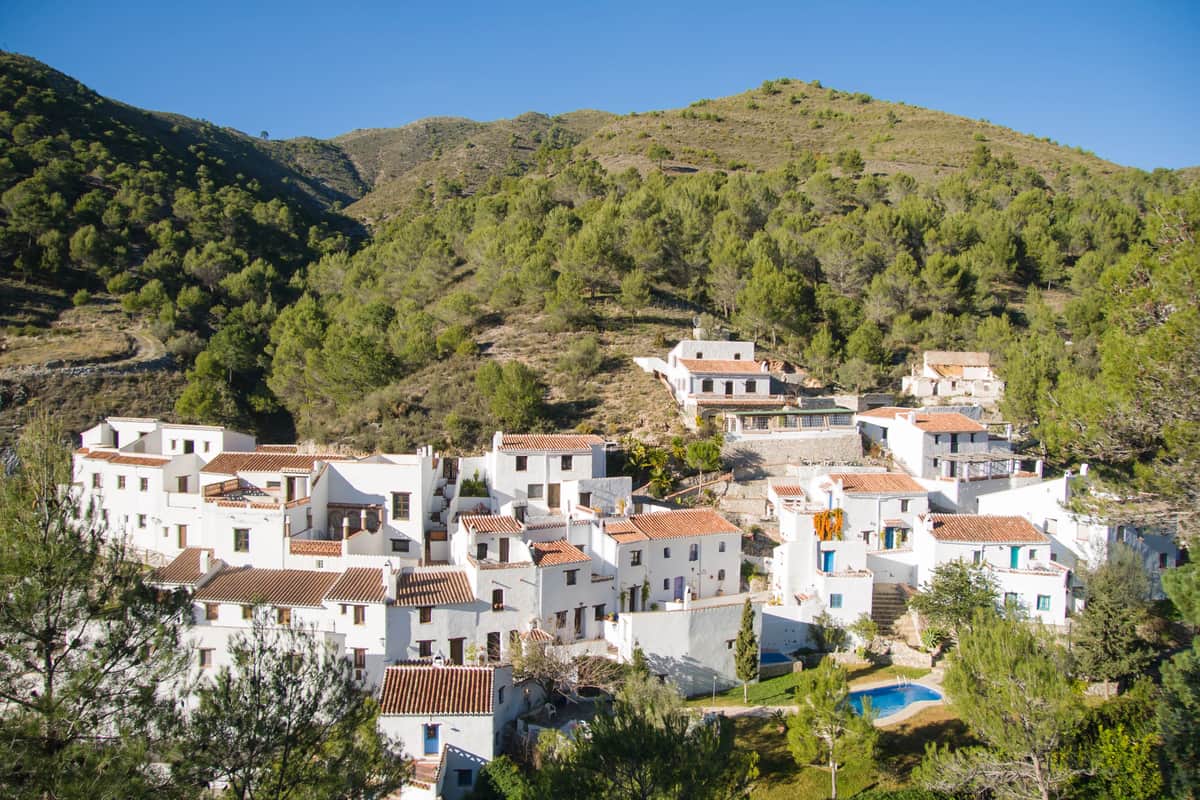
El Acebuchal is a tiny mountain hamlet hidden in the hills of southern Spain, not far from Nerja and Frigiliana. Often referred to as the lost village, it was completely abandoned in 1948 and remained empty for decades before being carefully rebuilt.
Today, the village is quiet and remote, with just one short main street and a handful of restored houses. It’s not a place for ticking off sights. You come for the setting, the history, and the sense of isolation that still defines it.
Tip: If you’re planning a wider trip through Andalusia, El Acebuchal fits naturally into an itinerary focused on the eastern Costa del Sol and the Axarquía interior. You’ll find useful planning tips in this Málaga travel guide.
DISCLOSURE: This page contains affiliate links. If you make a purchase via one of those links, we will earn a commission at no extra cost for you.
The origins of El Acebuchal
El Acebuchal developed as a small rural settlement in the mountain valleys inland from the coast. The name comes from acebuche, the Spanish word for wild olive trees, which still grow throughout the surrounding hills.
For centuries, this area formed part of a mountain crossing used by travellers and mule drivers moving goods between Málaga and Granada. El Acebuchal is thought to have grown around a roadside venta (inn), where people could rest, eat, and change animals before continuing through the sierras.
Over time, a small community developed around this stopping point. Families relied on subsistence farming, livestock, and lime production, which was traditionally used to whitewash houses across Andalusia. Life here was isolated and physically demanding. Even into the 20th century, the village had no electricity or running water, and access was limited to rough mountain tracks.
At its height, El Acebuchal is believed to have had around 200 residents living in a compact cluster of houses within the valley.
Why El Acebuchal was abandoned
El Acebuchal was abandoned in 1948, during the years of political repression that followed the Spanish Civil War.
After the war, armed resistance to Franco’s dictatorship continued in parts of rural Spain. In mountainous regions such as this one, small groups of guerrilla fighters — known as the maquis — operated from remote terrain, using the landscape for cover.
The Axarquía mountains were one of the areas affected by this activity. As part of wider counter-insurgency measures, isolated villages came under suspicion of supporting or sheltering guerrilla fighters. In 1948, the authorities ordered the complete evacuation of El Acebuchal.
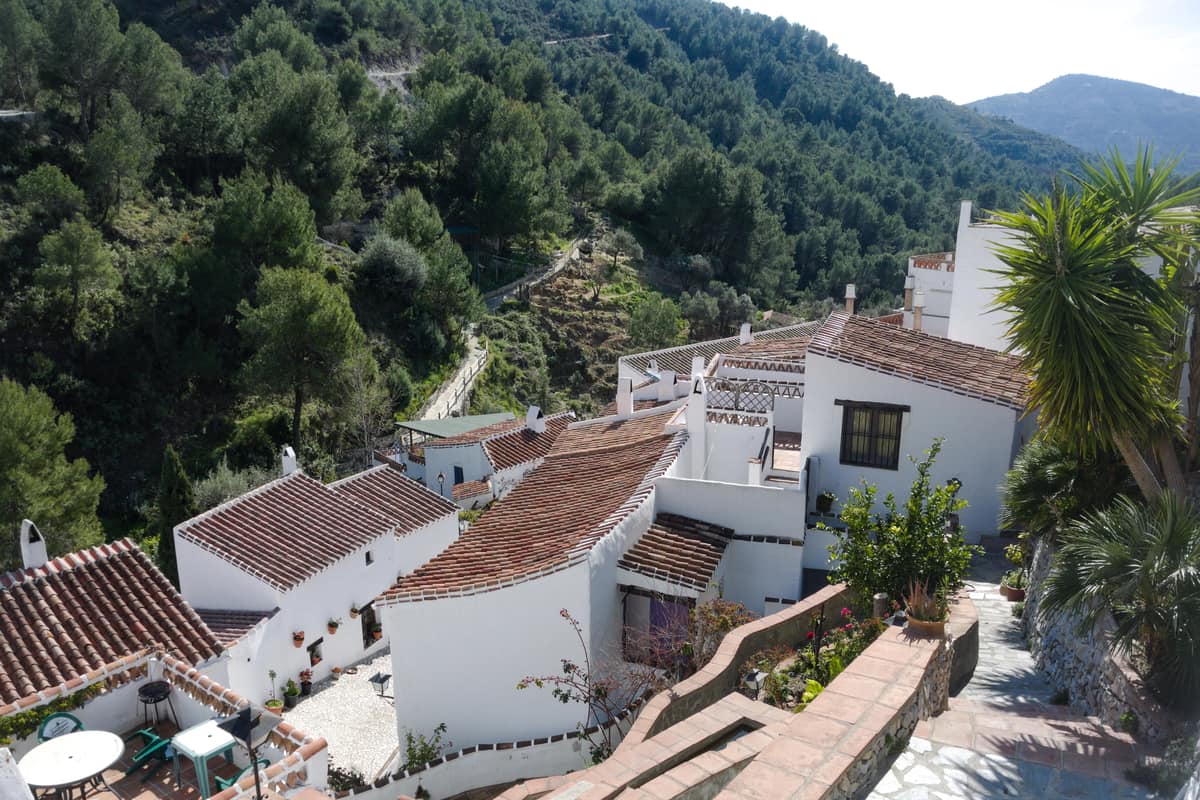
Residents were forced to leave their homes and were not permitted to return. With no inhabitants to maintain them, the buildings gradually deteriorated. Roofs collapsed, paths disappeared, and vegetation reclaimed the streets. For more than fifty years, El Acebuchal remained abandoned, earning its reputation as a pueblo fantasma — a ghost village hidden in the mountains.
Rebuilding the village
The revival of El Acebuchal began in the late 1990s, led by descendants of former residents who set out to restore the abandoned settlement. Using old photographs and surviving foundations, houses were rebuilt following the original layout and traditional style.

Progress was slow. Basic infrastructure such as electricity and running water did not arrive until the early 2000s. Rather than turning the village into a large-scale tourist development, the restoration focused on preserving its small size and rural character.
Today, El Acebuchal consists of around 36 restored houses, along with a small number of rural accommodations and places to eat. Despite its revival, it remains quiet and lightly inhabited.
Where is El Acebuchal?
El Acebuchal lies within the mountainous landscape of the Sierras of Tejeda, Almijara and Alhama, part of a protected natural area in eastern Málaga province. Administratively, it belongs to the municipality of Cómpeta, although it is geographically closer to Frigiliana.

If you’re already exploring the Axarquía interior, El Acebuchal works well as a quieter detour alongside other villages in the area. You can see how it fits into the region in this guide to things to do in Cómpeta.
Approximate distances by road:
- Frigiliana: around 7 km
- Nerja: around 14 km
- Málaga city: about 65 km
The village sits in a narrow valley, which explains both its historic isolation and the calm, enclosed atmosphere you experience when visiting.
How to get to El Acebuchal
There is no public transport to El Acebuchal, so you’ll need a car (affiliate link).
Most visitors approach from Nerja or Frigiliana, often combining the visit with time on the coast or in nearby white villages.
Tip: If you’re planning time in the area, these guides to things to do in Nerja and things to do in Frigiliana are useful starting points.
The road is paved most of the way, with a final dirt track leading into the village. In normal conditions, this approach is manageable in a standard car if you drive slowly and carefully.
Routes from inland villages such as Cómpeta or Torrox are steeper and rougher, with longer unpaved stretches. These are better suited to high-clearance vehicles and confident drivers.
Visiting El Acebuchal without a car
If you don’t want to drive mountain roads yourself, there is also the option to visit El Acebuchal as part of a guided day trip.
One small-group itinerary combines Nerja, Frigiliana, and El Acebuchal in a single day (affiliate link), with transport and local context included. This can be a practical option if you’re short on time or prefer not to handle unpaved roads.
What to expect when you visit
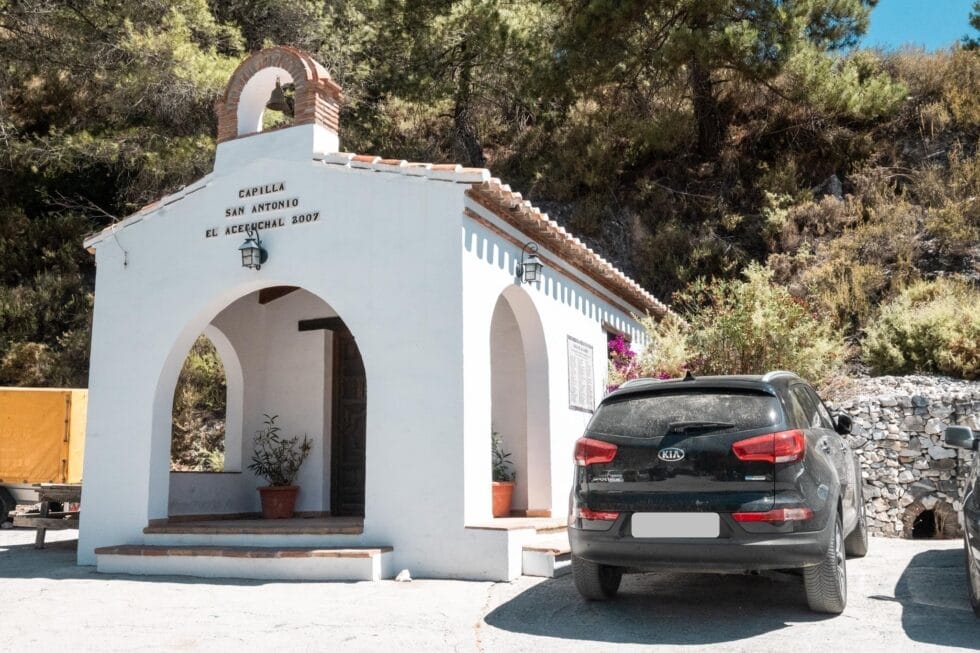
El Acebuchal is very small — essentially one main street with a few side alleys. There are no shops, museums, or formal attractions. However, the village has a small chapel dedicated to San Antonio. The Capilla de San Antonio was built in 2007 during the reconstruction of the village, following decades of abandonment.
A typical visit involves walking through the village, taking in the mountain setting, and stopping for lunch or a drink if a restaurant is open. Many people combine the visit with other nearby villages or coastal stops on the same day.
Opening hours vary by season, so it’s best not to assume everything will be open, particularly outside weekends and holidays.

Walking and hiking nearby
El Acebuchal is surrounded by walking routes within the natural park. One commonly used route leads down towards the Fábrica de la Luz area in the Torrox valley, passing through pine forest and along dry riverbeds.
Hiking here can be demanding, especially in summer, when temperatures can rise quickly even at altitude. Bring water, wear proper footwear, and plan your route with care.
Where to stay
There are a small number of rural accommodations in and around El Acebuchal, mostly restored village houses and fincas: La Soleria, Casa la Higuera, Cottages El Acebuchal. Availability is limited, and places often book out well in advance.
Many visitors choose to stay in nearby towns such as Nerja, Frigiliana, or Cómpeta, and visit El Acebuchal as a half-day or lunchtime trip.
Is El Acebuchal worth visiting?
El Acebuchal isn’t a destination for busy itineraries or major sights. Its appeal lies in its history, its mountain setting, and the fact that it has remained largely untouched by mass tourism.
If you enjoy quiet places with a strong backstory and a sense of remoteness, it’s well worth the detour.