
Andalusia is home to some of Spain’s most popular coastal destinations. From the Portuguese border in Huelva to the beaches of Almería, the region offers hundreds of kilometres of coastline, ranging from lively resorts and historic port cities to traditional fishing villages and unspoilt stretches of sand.
The Andalusian coast is traditionally divided into four distinct stretches of coastline: Costa de la Luz, Costa del Sol, Costa Tropical and Costa de Almería. Each has its own character, attractions and appeal.
If you’re planning a trip and wondering where to base yourself, understanding the differences between Andalusia’s coastal regions is a good place to start. This guide looks at each stretch of coastline in turn and highlights some of the destinations that make them worth visiting. By the end, you should have a much clearer idea of where to focus your time.
DISCLOSURE: This page contains affiliate links. If you make a purchase via one of those links, we will earn a commission at no extra cost for you.
Why the Andalusian Coast Is So Diverse
Although the Andalusian coast is often spoken about as a single destination, it actually stretches for almost 900 kilometres across four provinces and two very different seas. The Atlantic Ocean shapes the western coast around Huelva and Cádiz, bringing strong winds, powerful tides and long sandy beaches. Further east, the Mediterranean creates calmer waters, sheltered coves and a generally warmer climate.
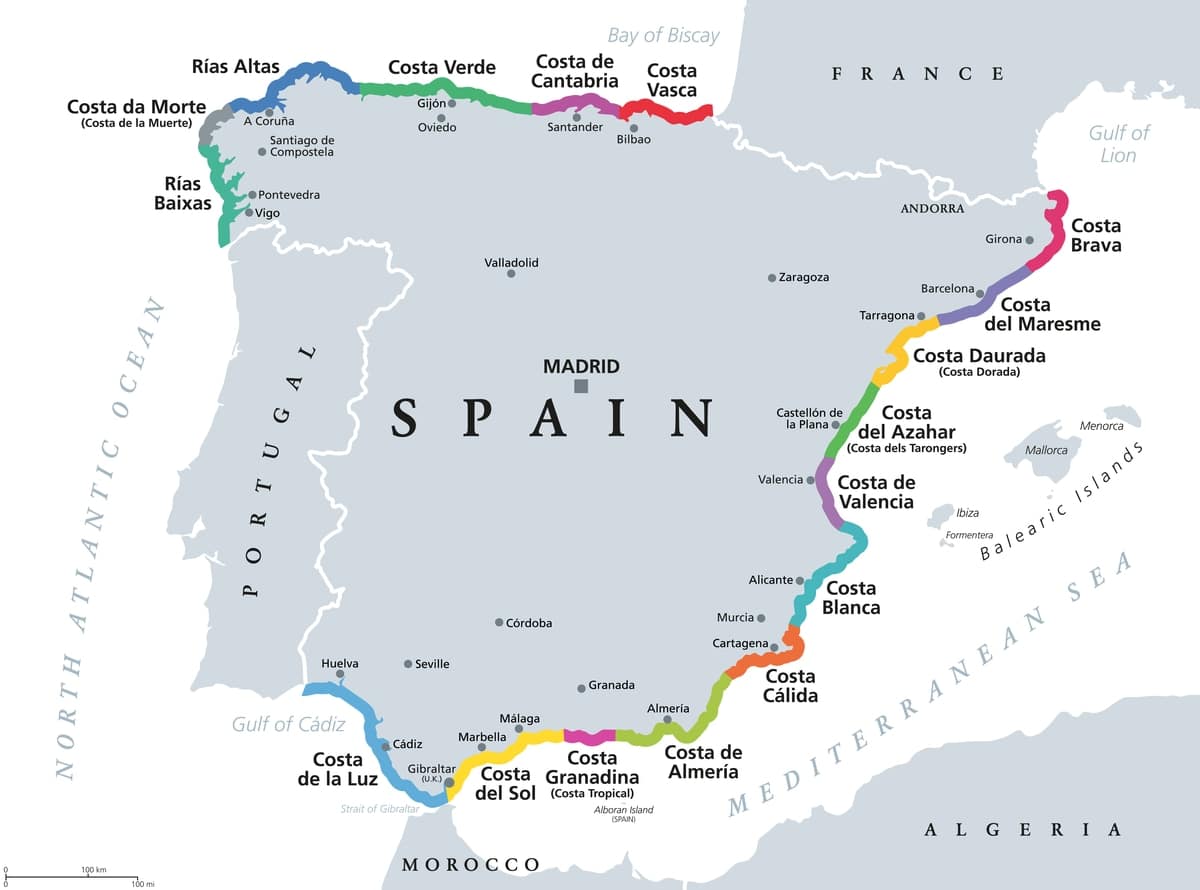
Geography also plays an important role. Vast dune systems and marshlands dominate parts of the west, while the mountains of Málaga, Granada and Almería often rise dramatically behind the shoreline. In some places, fertile valleys support tropical fruit plantations. In others, volcanic landscapes and desert-like scenery reach almost to the sea.
The result is a coastline that feels surprisingly varied. A beach holiday in Tarifa bears little resemblance to one in Nerja, Almuñécar or Mojácar, even though all four destinations sit within the same region.
Costa de la Luz
Costa de la Luz stretches along Andalusia’s Atlantic coast through Huelva and Cádiz provinces. The beaches here feel noticeably different from those on the Mediterranean. They’re often wider, wilder and backed by dunes rather than apartment blocks, while the Atlantic brings stronger winds and cooler water.
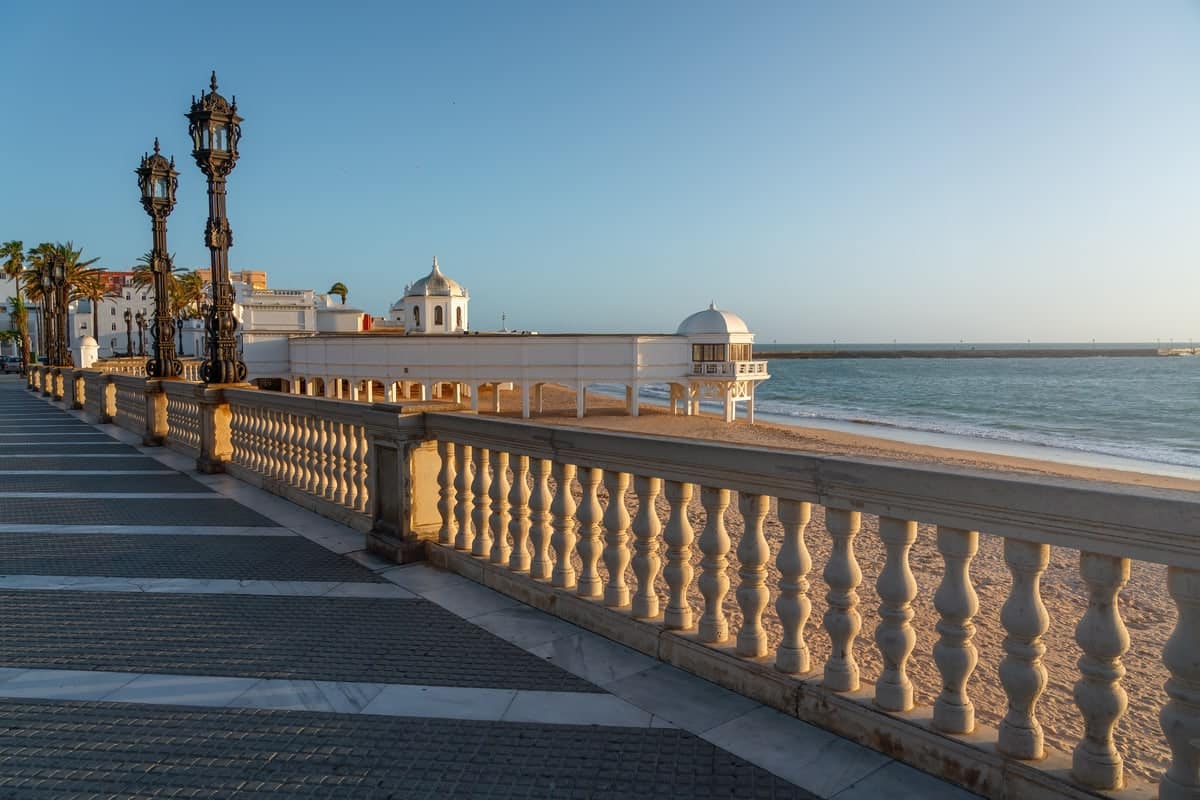
This is a coastline that still feels closely connected to the sea. Fishing remains an important part of daily life in many towns, seafood features heavily on local menus, and large stretches of coast remain remarkably undeveloped. You’ll also find some of Spain’s best conditions for surfing, kitesurfing and windsurfing, particularly around Tarifa.
If you’re looking for polished resorts and marina life, Costa del Sol is probably a better fit. If you prefer long beaches, smaller towns and a more relaxed atmosphere, Costa de la Luz often leaves the stronger impression.
Best For
- Long sandy beaches
- Surfing, kitesurfing and windsurfing
- Seafood and fishing towns
- Nature reserves and birdwatching
- A less developed coastline
Popular Places on Costa de la Luz
Tarifa
Tarifa sits where the Atlantic meets the Mediterranean and has a character unlike anywhere else in Andalusia. The constant winds have made it one of Europe’s best-known destinations for kitesurfing and windsurfing, but there’s much more to the town than water sports.
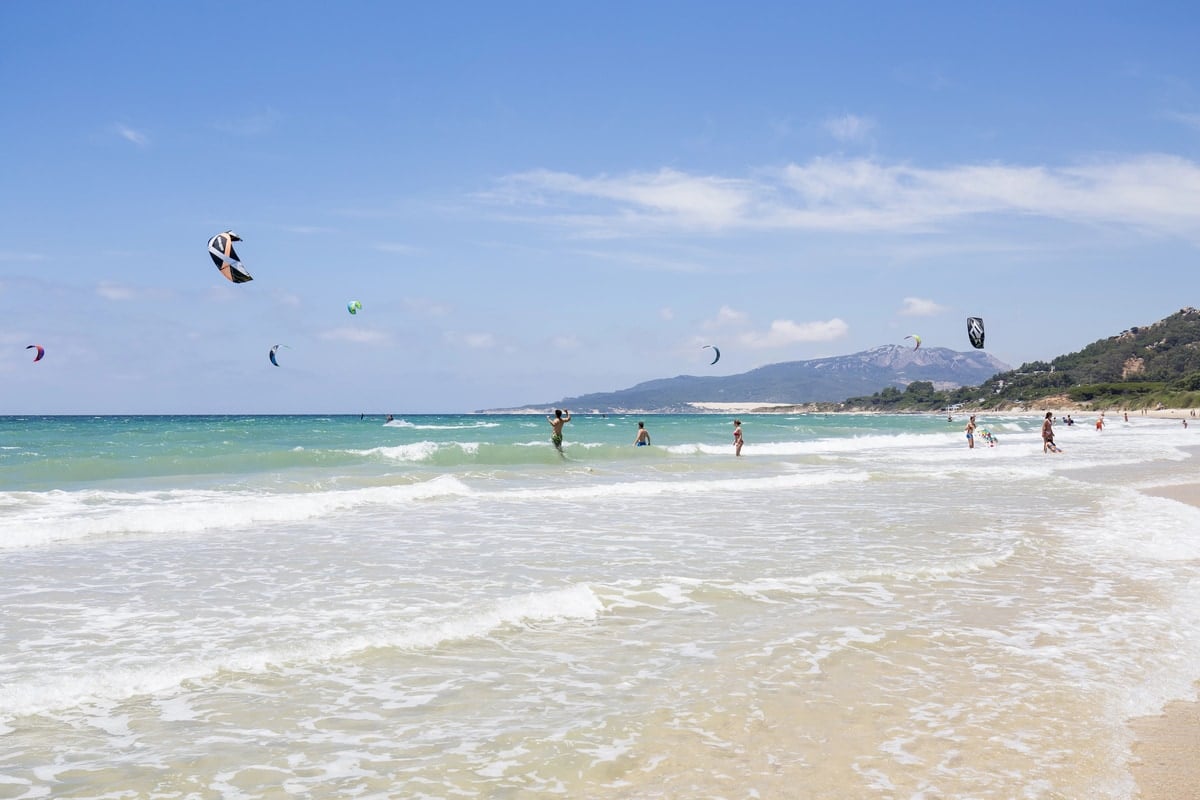
The historic centre is full of narrow streets, lively squares and independent cafés, while on a clear day you can see the mountains of Morocco across the Strait of Gibraltar.
Conil de la Frontera
Conil manages to balance popularity with authenticity better than most coastal towns in southern Spain. The beaches are excellent, the old town remains attractive and compact, and summer evenings spill out into squares, terraces and seafood restaurants.

If you’re choosing one destination that captures the atmosphere of the Cádiz coast, Conil is often a good place to start.
Zahara de los Atunes
Zahara revolves around one thing: its beach. Several kilometres of golden sand stretch along the coast, backed by little more than low-rise development and open views. The town itself remains relatively small, with a strong connection to the tuna fishing tradition that gave it its name.
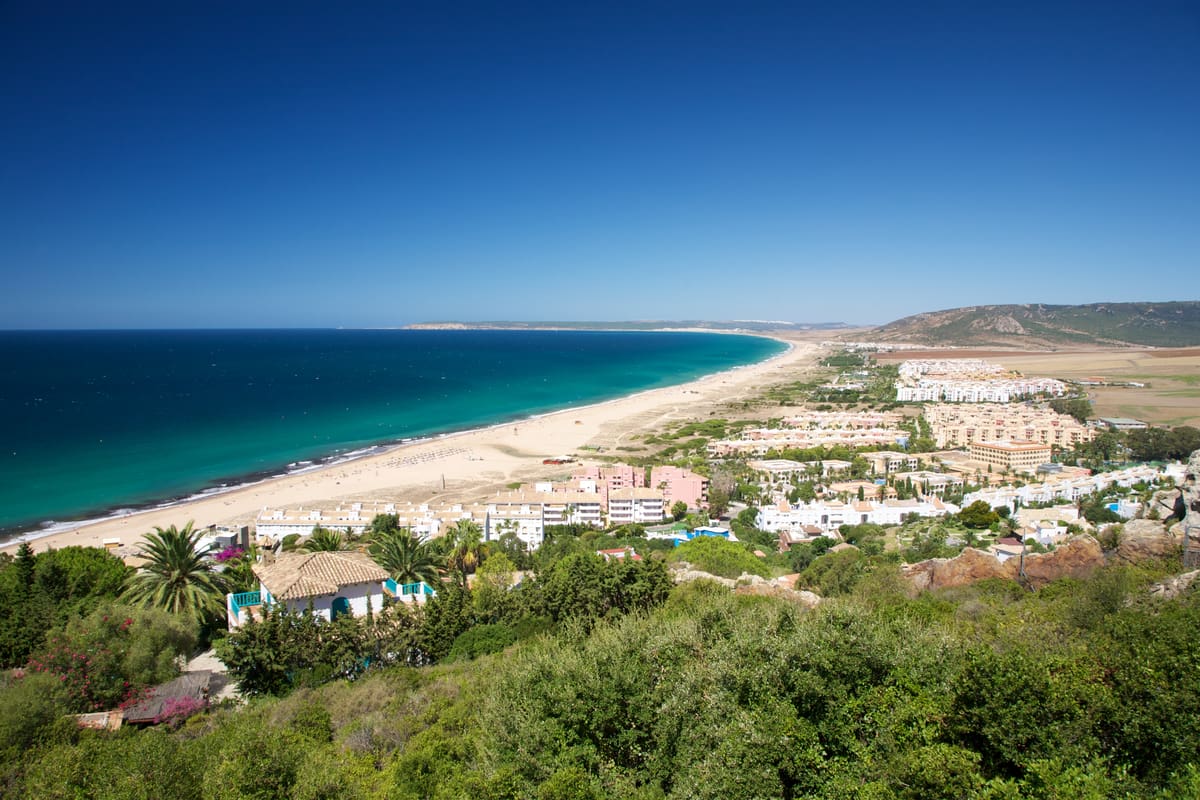
It’s the sort of place where beach days naturally turn into long lunches and late dinners.
El Puerto de Santa María
Part of the Bay of Cádiz, El Puerto offers a different side of Costa de la Luz. Alongside beaches, you’ll find historic streets, old fortifications and some of Andalusia’s most important sherry bodegas.

It’s a good choice if you want a coastal base with a little more history and city life mixed in.
Rota
Rota rarely appears on the same lists as Tarifa or Conil, but that’s part of its appeal. The town feels lived-in year-round, with broad beaches, a pleasant old centre and a seafront promenade that remains busy long after summer ends.

If you prefer places that feel more local than resort-focused, Rota deserves a closer look.
Isla Cristina
Close to the Portuguese border, Isla Cristina is one of Andalusia’s most important fishing ports. Seafood is naturally a highlight, but the surrounding landscape is just as interesting.
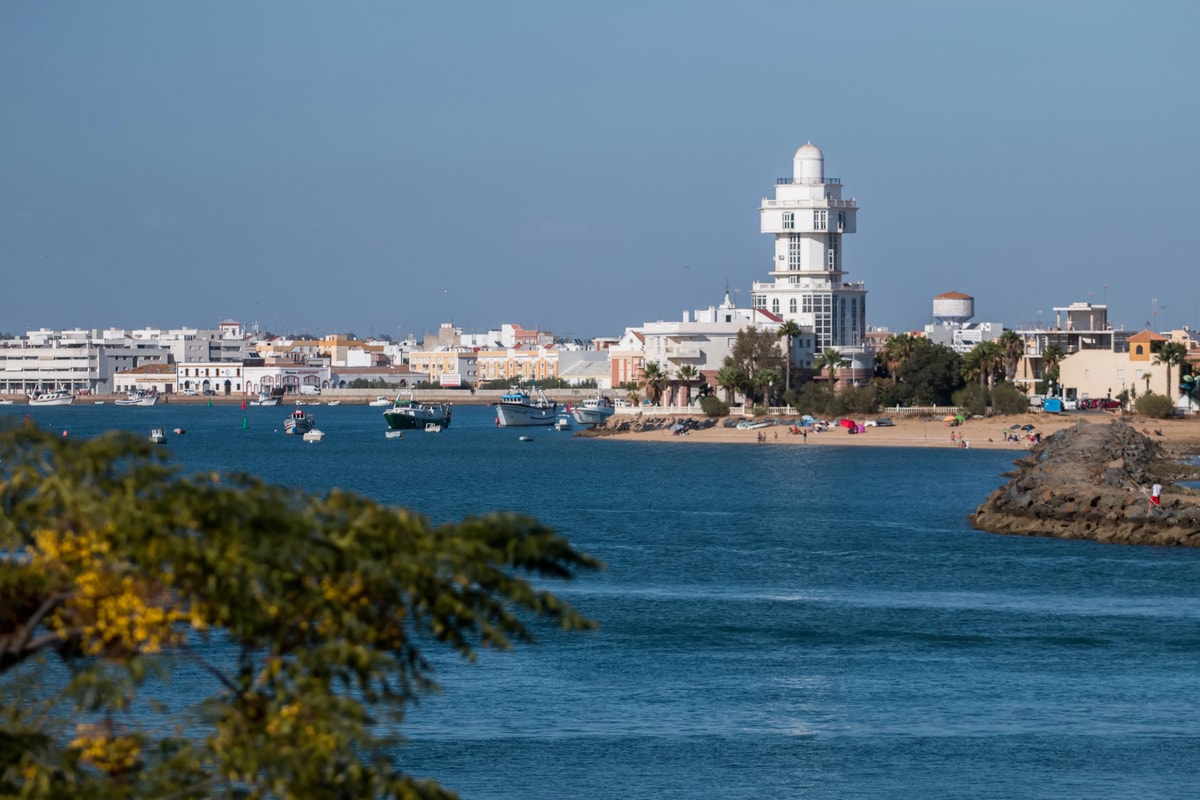
Marshlands, salt flats and protected natural areas sit alongside long sandy beaches, creating a very different coastal experience from the resort towns further east.
Costa del Sol
Costa del Sol is Andalusia’s best-known stretch of coastline and, for many people, the first introduction to the region. It’s also one of the easiest parts of southern Spain to explore. Málaga Airport provides excellent connections year-round, public transport is better than elsewhere on the coast, and you’ll find everything from small guesthouses to luxury resorts.
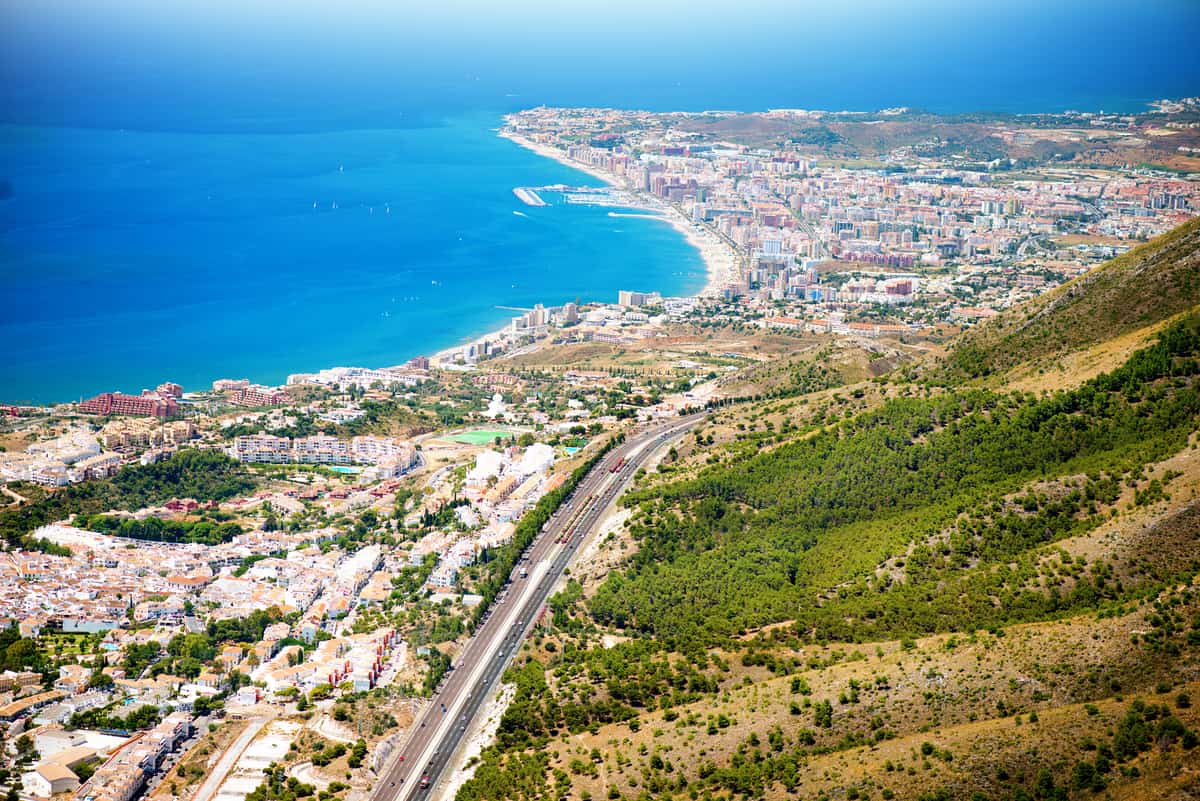
That popularity sometimes gives Costa del Sol an unfair reputation. While there are certainly areas dominated by tourism, there’s much more variety here than many people expect. Historic city neighbourhoods, traditional fishing districts, whitewashed old towns and quiet coves all exist alongside marinas, golf courses and beach resorts.
If you’re visiting Andalusia for the first time, Costa del Sol is often the easiest place to base yourself. The combination of beaches, transport links and access to destinations such as Málaga, Ronda, Caminito del Rey and Granada makes it a practical choice as well as a scenic one.
Best For
- First-time trips to Andalusia
- Family beach holidays
- City and beach combinations
- Dining and nightlife
- Exploring inland Andalusia
Popular Places on Costa del Sol
Málaga
Many people arrive in Málaga and head straight for the coast, but the city itself is worth your time. Alongside urban beaches, you’ll find one of Andalusia’s best collections of museums, an attractive historic centre and a food scene that has improved dramatically in recent years.

If you enjoy combining sightseeing with beach time, Málaga is arguably the most complete destination on the Andalusian coast.
Nerja
Nerja sits at the eastern end of Costa del Sol, where the landscape starts to become more rugged and mountainous. The town is known for its small coves, clear water and the famous Balcón de Europa, but what many people like most is its scale. Nerja is busy during the summer, yet it still feels like a town rather than a purpose-built resort.

It’s often a good choice if you want a traditional Mediterranean setting without giving up the convenience of a well-established tourist destination.
Marbella
Marbella is one of Spain’s most recognisable coastal destinations, but there’s more to it than luxury hotels and Puerto Banús. The old town remains one of the prettiest on the Costa del Sol, with flower-filled streets, small squares and plenty of good places to eat.

If you’re looking for a destination that combines beaches, dining and a lively atmosphere, Marbella continues to do that exceptionally well.
Estepona
Over the past decade, Estepona has become one of the most appealing towns on the Costa del Sol. The historic centre has been carefully restored, the seafront is attractive and easy to walk, and the overall atmosphere feels noticeably more relaxed than some of its larger neighbours.

Many people who return to the Costa del Sol year after year end up favouring Estepona over the better-known resort towns.
Benalmádena
Benalmádena offers a little bit of everything. There are family-friendly beaches, a busy marina, hillside viewpoints and plenty of accommodation options. It’s particularly convenient if you want easy access to Málaga without staying in the city itself.

The resort areas can feel busy in peak season, but its location makes it a practical base for exploring the wider coast.
Fuengirola
Fuengirola has long been one of the Costa del Sol’s most popular holiday destinations. The beach stretches for several kilometres, the promenade is among the best on the coast, and train connections to Málaga and the airport are excellent.
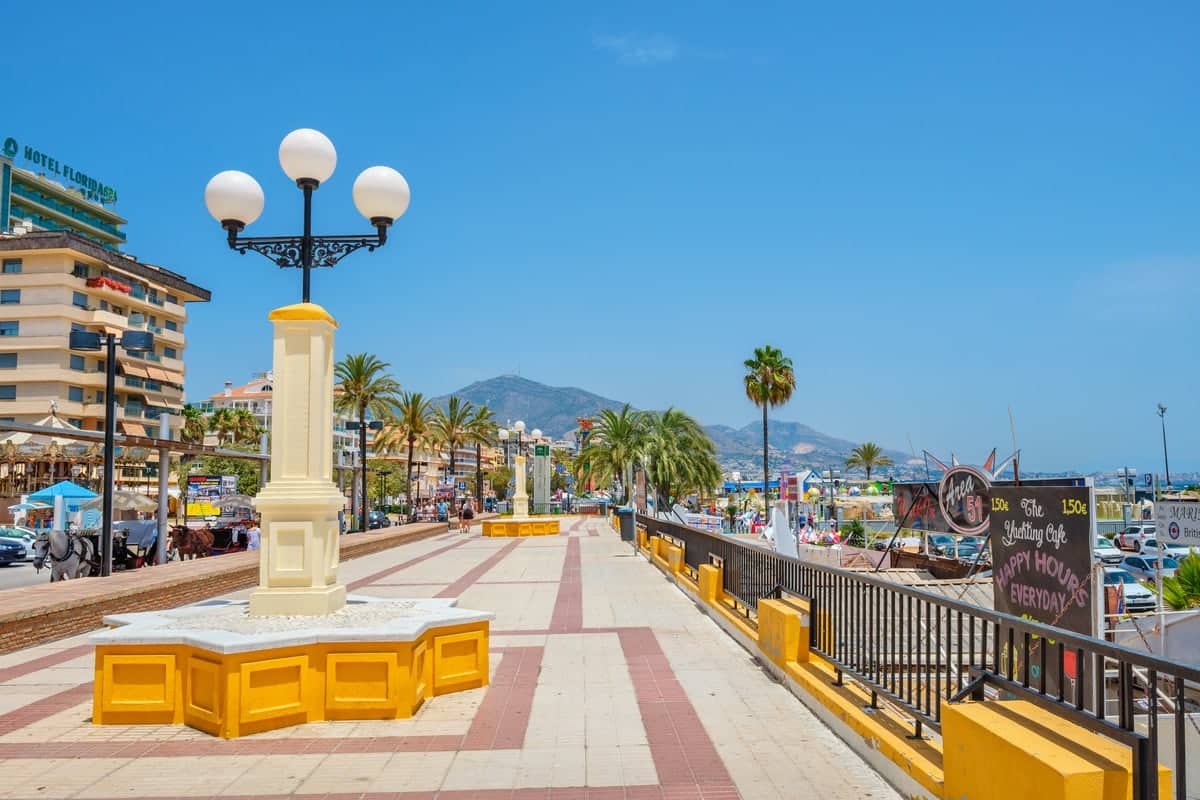
What keeps many people returning is the convenience. Everything is easy here, from getting around to finding somewhere to eat, making it a particularly good choice for a relaxed beach holiday.
Costa Tropical
Costa Tropical, also known as Costa Granadina, occupies a relatively short stretch of coastline in Granada province, squeezed between the better-known Costa del Sol and Costa de Almería. It is often overlooked by first-time visitors, which is precisely why many people end up liking it so much.
The first thing you’ll notice is the landscape. Mountains rise steeply behind the coast, creating dramatic views that are quite different from the flatter beaches further west. The Sierra Nevada also helps create a unique microclimate, allowing tropical fruits such as mangoes, avocados and chirimoyas to thrive here.

The coastline itself feels more rugged and less heavily developed than much of the Costa del Sol. Instead of long stretches of continuous resorts, you’ll find a series of bays, small beaches and towns that have largely grown at their own pace.
If you’re looking for nightlife, large marinas and endless resort facilities, Costa Tropical probably isn’t the right fit. If you prefer scenery, a slower pace and places that still feel distinctly local, this part of Granada’s coast can be very rewarding.
Best For
- Scenic coastal landscapes
- A quieter Mediterranean coast
- Local atmosphere
- Food and tropical fruit-growing areas
- Combining the coast with Granada city or the Alpujarras
Popular Places on Costa Tropical
Almuñécar
Almuñécar is the natural centre of Costa Tropical and usually the best place to begin exploring the region. It has the widest choice of accommodation, plenty of restaurants and several beaches within easy reach.

What makes Almuñécar particularly appealing is the balance it strikes. You get the facilities of a well-established seaside town without feeling surrounded by large-scale tourism. Add a historic centre, a hilltop castle and traces of its Roman and Phoenician past, and there’s enough here to keep you occupied when you’re not at the beach.
Salobreña
Few coastal towns in Andalusia are as instantly recognisable as Salobreña. The whitewashed old town climbs a rocky hill above the Mediterranean, crowned by a Moorish castle that dominates the skyline.
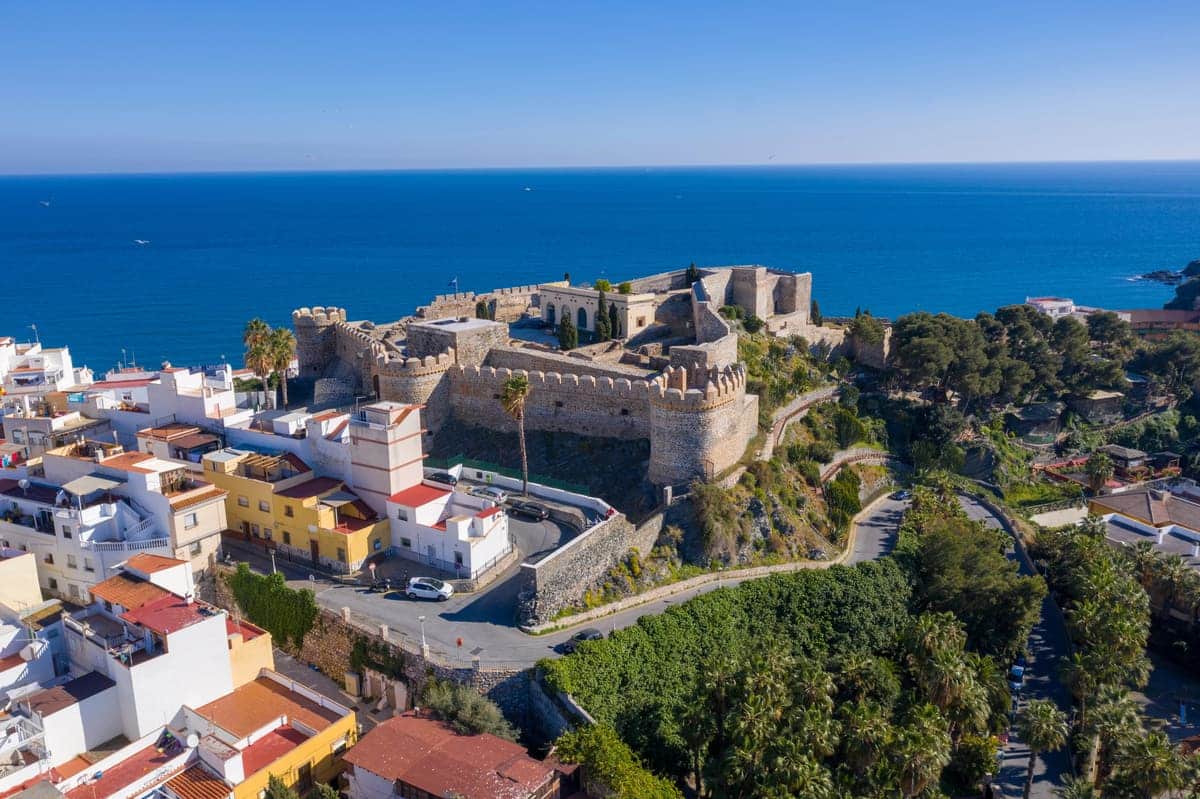
It’s the kind of place that rewards wandering. The steep streets, viewpoints and small squares are as much a part of the experience as the beach below. If you’re looking for somewhere with a strong sense of place rather than a typical resort atmosphere, Salobreña is hard to beat.
La Herradura
La Herradura sits around a broad horseshoe-shaped bay framed by headlands on either side. The setting alone makes it one of the most attractive spots on the Costa Tropical.
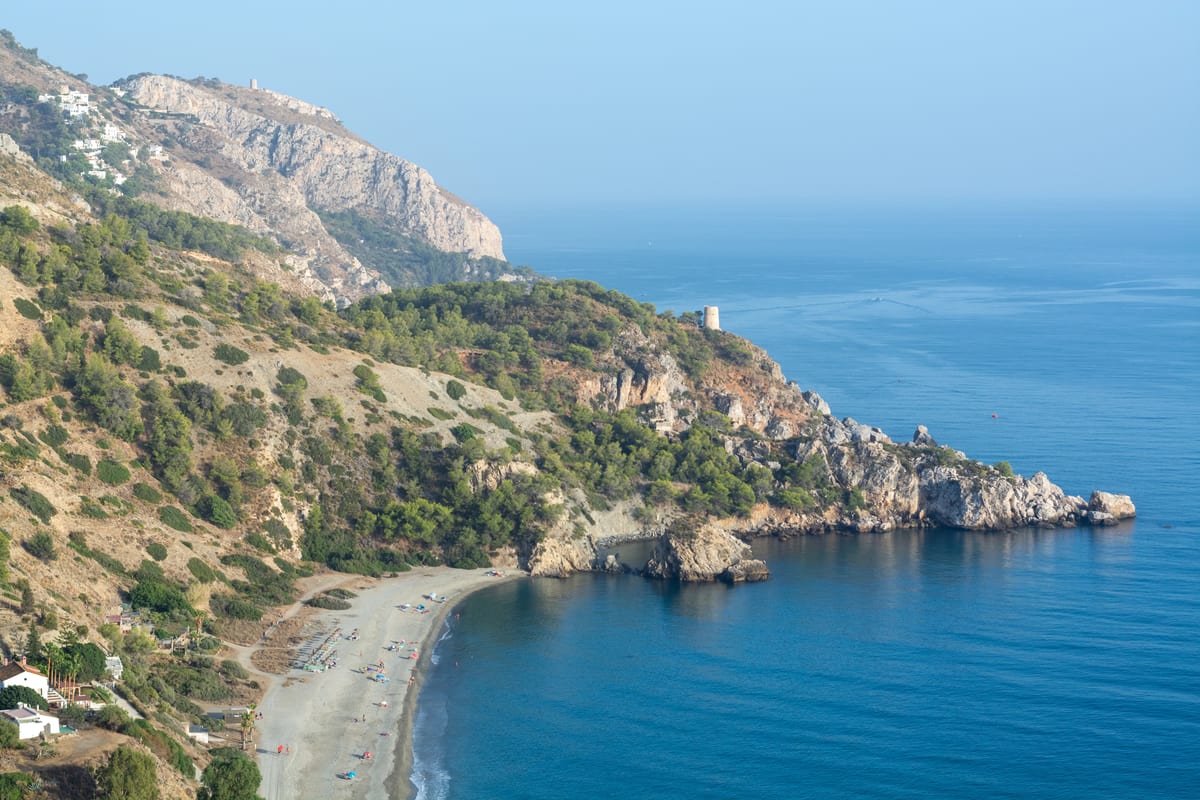
The town has a more relaxed feel than nearby Almuñécar and is particularly popular with divers, kayakers and anyone who enjoys being on the water. Even in summer, it often feels calmer than many comparable destinations elsewhere on the Andalusian coast.
Motril
Motril is Granada province’s main coastal city and serves as an important commercial and transport hub. It doesn’t receive the same attention as Almuñécar or Salobreña, but it can make a practical base if you want easy access to both the coast and inland Granada.
The beaches are less picturesque than those found elsewhere on the Costa Tropical, but they’re spacious, generally less crowded and backed by a more authentic everyday atmosphere.
Costa de Almería
If Costa de la Luz feels Atlantic and Costa Tropical feels lush, Costa de Almería often feels almost otherworldly. This is Andalusia at its driest and most dramatic, where rugged mountains, volcanic landscapes and desert scenery meet the Mediterranean.

The coastline is also noticeably less developed than much of the Costa del Sol. Large resort areas do exist, particularly around Roquetas de Mar, but much of the province remains remarkably untouched. Nowhere is this more obvious than in Cabo de Gata-Níjar Natural Park, one of Spain’s most striking coastal landscapes.
Costa de Almería tends to appeal to people who enjoy exploring. The beaches are often more remote, the distances between towns are greater and the scenery constantly changes as you move along the coast. It feels less polished than some parts of Andalusia, but that’s a large part of its appeal.
Best For
- Natural landscapes
- Remote beaches and coves
- Road trips
- Hiking and outdoor activities
- Travellers looking beyond the classic resort experience
Popular Places on Costa de Almería
Mojácar
Mojácar is one of the most distinctive destinations on the Andalusian coast. The original village sits high on a hillside overlooking the Mediterranean, while a separate coastal area stretches along the shoreline below.

Many places in Andalusia have either a beautiful old town or a good beach. Mojácar manages to offer both. You can spend the morning wandering through narrow whitewashed streets and the afternoon by the sea without travelling more than a few minutes.
San José
If you’re planning to explore Cabo de Gata, San José is usually the best place to base yourself. The town sits beside a sheltered bay and has enough restaurants, accommodation and services to make it convenient without feeling overdeveloped.

From here, some of the natural park’s best-known beaches are within easy reach, including Playa de los Genoveses and Playa de Mónsul. If your idea of a beach holiday involves scenery as much as sunbathing, San José is hard to beat.
Carboneras
Carboneras often gets overlooked by travellers heading directly to Cabo de Gata, but it’s worth slowing down here. The town retains a strong connection to fishing and everyday local life, while some of the province’s most impressive coastal scenery lies just beyond its outskirts.
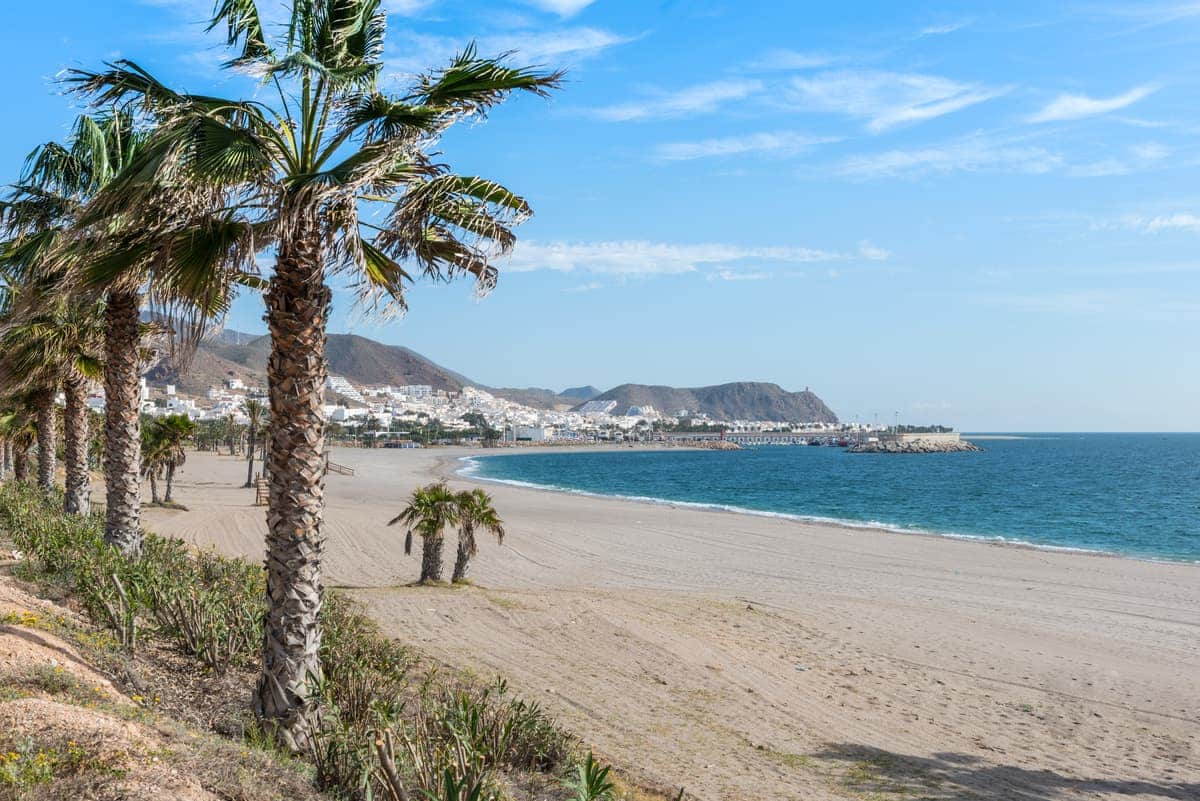
It’s also one of the gateways to Playa de los Muertos, frequently ranked among the most beautiful beaches in Spain.
Roquetas de Mar
Roquetas de Mar is the Costa de Almería destination that will feel most familiar to anyone who has spent time on the Costa del Sol. Long beaches, resort hotels, family-friendly facilities and a busy seafront promenade make it one of the province’s most popular holiday bases.

If you’re looking for a straightforward beach holiday with good facilities and reliable sunshine, Roquetas is often the safest choice on this stretch of coast.
Vera Playa
Vera Playa offers a very different atmosphere from the dramatic landscapes further south. The beaches are long, open and easy to access, and the area has developed a loyal following among both Spanish and international residents.

It’s a good option if your priority is simply spending time by the sea rather than exploring the region’s natural parks and mountain scenery.
Choosing a Base on the Andalusian Coast
If you’re still undecided, the best choice often comes down to the type of trip you’re planning.
For a first visit to Andalusia, Málaga is hard to beat. You get beaches, excellent transport connections and easy access to many of the region’s headline attractions. Nerja offers a similar mix of convenience and scenery on a smaller scale.
If your priority is spending as much time as possible on the beach, consider Conil de la Frontera, Zahara de los Atunes, Marbella or Estepona. Each has a different atmosphere, but all work well as beach-focused bases.
For a quieter holiday, look towards Salobreña or La Herradura on the Costa Tropical, where the pace is generally slower and tourism less dominant.
If dramatic scenery and nature are high on your list, Costa de Almería stands apart. San José and Mojácar are particularly good bases for exploring the region’s beaches and natural landscapes.
Families often favour Fuengirola, Benalmádena and Roquetas de Mar thanks to their long beaches, family-friendly facilities and straightforward logistics.
And if your ideal day involves a surfboard rather than a sun lounger, head to Tarifa.
When to Visit the Andalusian Coast
The Andalusian coast is a year-round destination, but the experience varies considerably depending on both the season and where you stay.
For a traditional beach holiday, late spring through early autumn is the best time to visit. The main beach season runs from May to October, with warm temperatures and plenty of sunshine across the region.
July and August are the busiest months, particularly during the Spanish summer holidays. Beaches, restaurants and resorts are at their liveliest, while June and September often offer the best balance of good weather, warm sea temperatures and fewer crowds.
The Atlantic coast around Cádiz and Huelva tends to feel cooler in summer thanks to the ocean breezes, while the Mediterranean coast generally enjoys warmer sea temperatures well into autumn.
Winter is much quieter, but it’s far from a bad time to visit. Costa del Sol and Costa Tropical enjoy some of the mildest weather in mainland Europe, while Costa de Almería’s dry climate makes it an excellent choice for walking, sightseeing and exploring the coast outside the peak season.
If your main goal is a beach holiday, aim for late spring, summer or early autumn. For coastal towns, food, walking and sightseeing, the Andalusian coast remains appealing throughout the year.
Planning Your Coastal Holiday in Andalusia
One of the biggest mistakes people make when planning a trip to the Andalusian coast is underestimating its size. The distance from the Portuguese border in Huelva to the eastern beaches of Almería is almost 900 kilometres, and the experience changes considerably along the way.
For most trips, you’ll get more from focusing on one part of the coast, or perhaps combining two neighbouring regions, than trying to cover the entire Andalusian coastline in a single holiday.
Airports
Most international travellers arrive through Málaga Airport, the busiest airport in southern Spain and the main gateway to Costa del Sol. It also works well for Costa Tropical, with Almuñécar and Salobreña reachable in around an hour by car.
Granada Airport is another option for Costa Tropical, particularly if you’re planning to combine the coast with time in Granada city. Flight options are more limited than Málaga, but the airport can be convenient for destinations along Granada’s coastline.
If you’re heading to Costa de la Luz, Jerez Airport is often the most convenient option, particularly for destinations in Cádiz province. Seville Airport can also be a good alternative, especially if you’re planning to combine the coast with a few days inland.
For Costa de Almería, Almería Airport offers the shortest transfer times, although flight options are generally more limited than in Málaga.
Need a transfer from the airport? Compare transfer options across Andalusia. (affiliate link)
Do You need a Car?
That depends on where you’re staying.
If you’re based on the Costa del Sol, you can comfortably visit many destinations using public transport. Málaga, Benalmádena, Torremolinos and Fuengirola are connected by frequent commuter trains, while buses cover much of the rest of the coastline.
Elsewhere, having a car gives you much more flexibility. This is particularly true on Costa Tropical and Costa de Almería, where some of the most interesting beaches, viewpoints and smaller towns are difficult to reach without your own transport.
A car is also useful on Costa de la Luz if you plan to explore several towns rather than stay in a single resort.
Need a car for your trip? Compare rental prices in Andalusia (affiliate link).
Getting Around
Andalusia has a good long-distance bus network, and most coastal towns are connected by regular services. Trains are more limited once you leave Málaga province, so journeys along the coast often take longer than you might expect.
If you’re planning to explore beyond the beach, a car usually allows you to make the most of your time. Destinations such as the White Villages, the Alpujarras, Cabo de Gata or the mountains behind Marbella are all much easier to reach independently.
Distances Along the Coast
The Andalusian coastline is larger than many people expect. Destinations that appear close together on a map can be several hours apart by road.
For that reason, it’s usually better to choose a base and explore the surrounding area rather than constantly changing accommodation.
The good news is that every stretch of the coast offers enough beaches, towns and day-trip opportunities to keep you busy for an entire holiday.
Explore the Andalusian Coast
From the Atlantic beaches of Cádiz and Huelva to the dramatic landscapes of Almería, the Andalusian coast offers an extraordinary variety of places to explore.
If you’ve already identified the stretch of coastline that suits your trip, continue with our dedicated guides for more detailed destination information, beach recommendations and itinerary ideas.
- Costa de la Luz Guide
- Costa del Sol Guide
- Costa Tropical Guide
- Costa de Almería Guide
Together, these guides cover everything from surf towns and fishing villages to resort destinations, natural parks and some of the most beautiful beaches in southern Spain.