
Spain is getting ready for something truly special: three major solar eclipses in three consecutive years.
And if you’re planning a trip to Andalusia, you’re in a very interesting position. While the 2026 total eclipse will be best seen from northern and central Spain, Andalusia becomes one of the most exciting places in the country for the next two events: the 2027 total solar eclipse and the 2028 annular eclipse, also known as the “ring of fire”.
So, should you plan an eclipse trip to Andalusia? Absolutely, but you’ll want to choose your dates, destinations and accommodation carefully.
Here’s what you need to know about the 2026, 2027 and 2028 solar eclipses in Spain, with a special focus on what you can see from Andalusia.
DISCLOSURE: This page contains affiliate links. If you make a purchase via one of those links, we will earn a commission at no extra cost for you.
Accuracy note: Eclipse dates, visibility areas and safety advice in this guide have been checked against official Spanish eclipse information. Before booking your final viewing spot, always confirm the exact path, timing and local guidance for your chosen location.
Spain’s 2026, 2027 and 2028 solar eclipses at a glance
Spain will experience a rare sequence of major eclipse events: a total eclipse in 2026, another total eclipse in 2027, and an annular eclipse in 2028.
| Date | Type of eclipse | What it means for Andalusia |
|---|---|---|
| 12 August 2026 | Total solar eclipse | Andalusia will see a very deep partial eclipse |
| 2 August 2027 | Total solar eclipse | The main event for Andalusia, especially the southern coast |
| 26 January 2028 | Annular solar eclipse | Much of Andalusia will see the “ring of fire” |
Quick answer: which eclipse should you see from Andalusia?
If you want to see the best eclipse from Andalusia, focus on the 2 August 2027 total solar eclipse. Its path of totality crosses southern parts of Cádiz, Málaga, Granada and Almería. The 26 January 2028 annular eclipse is also excellent for Andalusia, with annularity visible across most of the region except the southeastern strip of Almería. The 12 August 2026 eclipse will be visible from Andalusia as a very deep partial eclipse, but not as a total eclipse.
Planning your Andalusia eclipse trip?
If you’re thinking about travelling to Andalusia for one of Spain’s upcoming eclipses, it’s worth planning early – especially for the 2027 total solar eclipse, which falls in August, right in the middle of the busy summer season.
Start by choosing your base, then compare accommodation, transport and flexible booking options before prices rise or the best places sell out.
- Compare hotels in Andalusia (affiliate link)
- Compare car rentals in Andalusia (affiliate link)
- Browse tours and experiences in Andalusia (affiliate link)
Tip: for the 2027 eclipse, look especially at Málaga, Cádiz, Marbella, Tarifa, Algeciras and the southern coast. For the 2028 eclipse, Seville, Cádiz, Córdoba, Málaga and Granada can all work well as travel bases.

The 2026 solar eclipse in Spain: what you’ll see from Andalusia
The first eclipse in this trilogy takes place on 12 August 2026.
This will be a total solar eclipse in Spain, but the path of totality will cross mainly the north and centre of the country, from Galicia towards the Balearic Islands. The total eclipse path includes regions such as Galicia, Asturias, Castilla y León, Madrid, Castilla-La Mancha, Aragón, Catalonia, Valencia and the Balearic Islands.
So, what about Andalusia?
From Andalusia, the 2026 eclipse will not be total. Instead, you’ll see a very deep partial eclipse. In much of the region, more than 90% of the Sun will be obscured.
That means it will still be impressive. The light will change, the atmosphere may feel strange, and you’ll be able to follow the Moon moving across the Sun with proper eclipse glasses.
But if your dream is to stand in the path of totality in 2026, you’ll need to travel north from Andalusia.
Should you travel to Andalusia for the 2026 eclipse?
Yes, you could – especially if Andalusia is already on your travel wish list.
The 2026 eclipse will still be impressive from Andalusia, with a very deep partial eclipse visible across much of the region. You can combine it with a summer trip to Málaga, Cádiz, Seville, Granada or the coast, and enjoy the eclipse as one memorable part of your itinerary.
But if your main goal is to experience totality in 2026, Andalusia is not the best base. For that, you’ll need to travel further north or east in Spain, depending on the exact viewing area you choose.
So for 2026, think of Andalusia as a good choice for a beautiful trip with a deep partial eclipse – not as the place to see the total eclipse itself.
Read more: Our complete travel guide to the 2026 eclipse in Andalusia.
The 2027 total solar eclipse in Andalusia: the main event
The date to circle in your calendar is 2 August 2027.
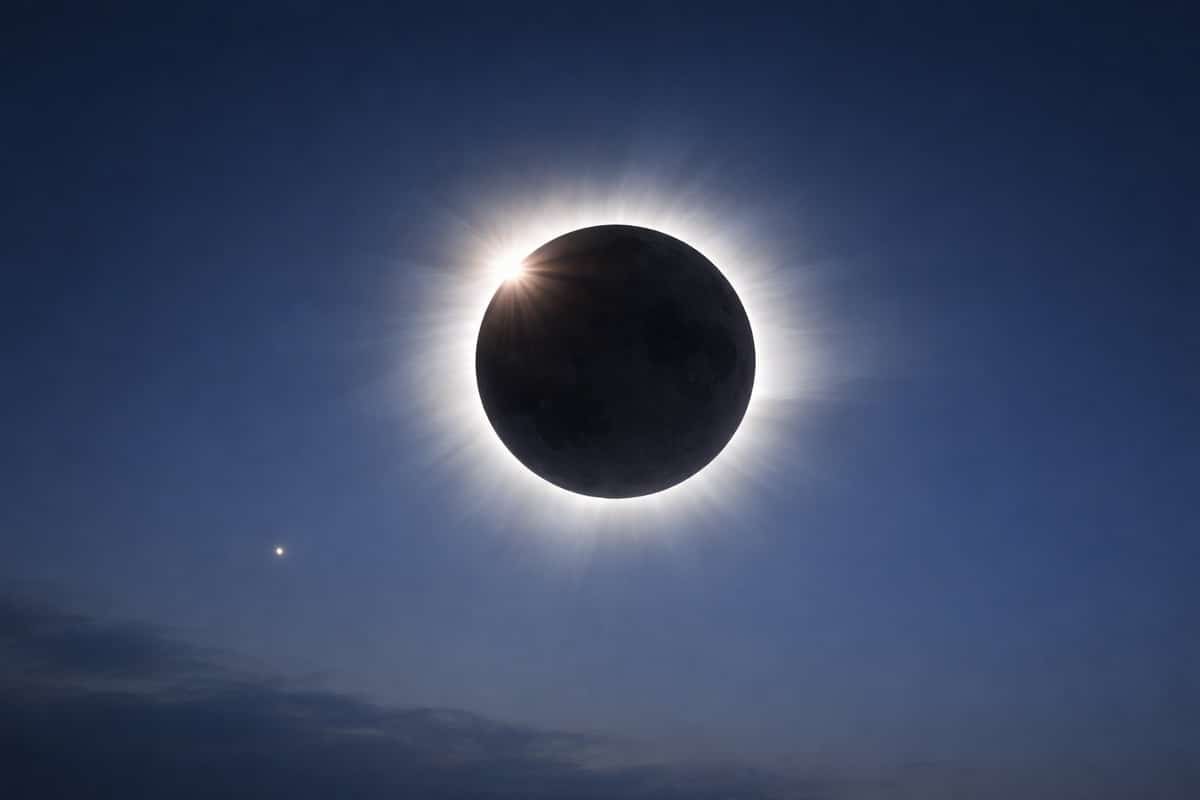
This is the eclipse that makes Andalusia one of the most exciting places in Europe for eclipse travel. The 2027 event, often referred to as the ‘eclipse of the century’, is expected to be especially memorable because of its unusually long maximum duration, which can reach up to six minutes in some locations. In Spain, the path of totality will cross the Strait of Gibraltar and the Alboran Sea, with southern Andalusia among the key viewing areas.
The Andalusian coast will become the prime viewing area. Places such as Cádiz, Málaga, Marbella and Algeciras will be among the key Andalusian areas to research, while the Strait of Gibraltar is expected to be one of the European areas with a longer duration of totality.
In simple terms: 2027 is the eclipse you come to Andalusia for.
Where in Andalusia will the 2027 total eclipse be visible?
The 2027 total eclipse will cross the south of Cádiz, Málaga, Granada and Almería.
That gives you a wonderful range of travel options, from lively beach cities to quieter coastal towns and dramatic viewpoints near the Strait of Gibraltar.
| Base | Best for | Good to know |
|---|---|---|
| Málaga | Easy flights, city break, beaches | Likely to be busy in August |
| Cádiz | Old town charm and Atlantic beaches | Good for a slower coastal trip |
| Tarifa / Algeciras | Strait of Gibraltar scenery | Check exact path and local access |
| Granada coast | Quieter coastal base | Useful if combining with Granada city |
| Coastal Almería | Road trip and quieter beaches | Check the exact location carefully |
For exact visibility, timing and duration, check the official eclipse trajectory viewer before booking a specific viewing spot.
Best places in Andalusia for the 2027 total solar eclipse
Because this is also a travel experience, the “best” place depends on what kind of trip you want.
Málaga: best for easy travel
Málaga is one of the easiest bases for an eclipse trip to Andalusia. You have an international airport, train connections, plenty of hotels, beaches, museums, restaurants and day trip options.

It’s also a great choice if you want the eclipse to be part of a bigger Andalusia itinerary. You can spend a few days in Málaga, visit the Caminito del Rey, explore the white villages, or head along the coast.
The downside? Málaga will probably be popular. August is already high season on the Costa del Sol, and the 2027 eclipse will only add to demand.
Marbella and the Costa del Sol: best for a beach holiday
If you want your eclipse trip to feel like a summer holiday, the Costa del Sol is the obvious choice.
Marbella, Estepona, Fuengirola, Benalmádena and nearby coastal towns give you beaches, resorts, restaurants and easy access from Málaga Airport. This is ideal if you want comfort and convenience.
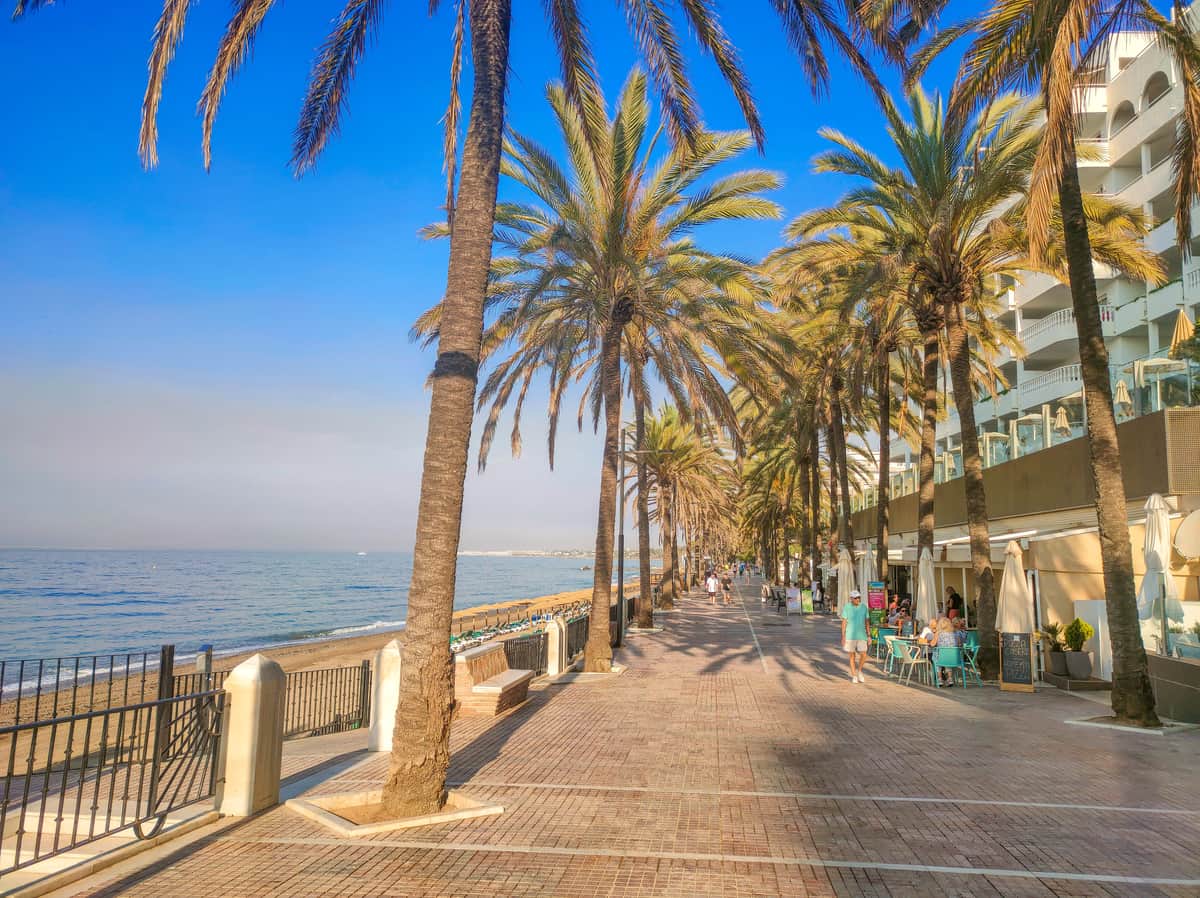
Just keep in mind that August is peak season. For 2027, you should plan much earlier than you normally would.
Cádiz: best for atmosphere and old-town charm
Cádiz is one of Andalusia’s most atmospheric coastal cities. You get Atlantic beaches, a historic old town, seafood, sunset walks and easy connections to other places in Cádiz province.

For an eclipse trip, Cádiz gives you more than just the event itself. You can turn it into a beautiful slow-travel itinerary with nearby places like El Puerto de Santa María, Sanlúcar de Barrameda, Jerez de la Frontera or Vejer de la Frontera.
Tarifa and the Strait of Gibraltar: best for dramatic scenery
If you love big landscapes, look closely at the Strait of Gibraltar area. The Strait of Gibraltar is also one of the European areas with the longest totality duration for the 2027 eclipse.
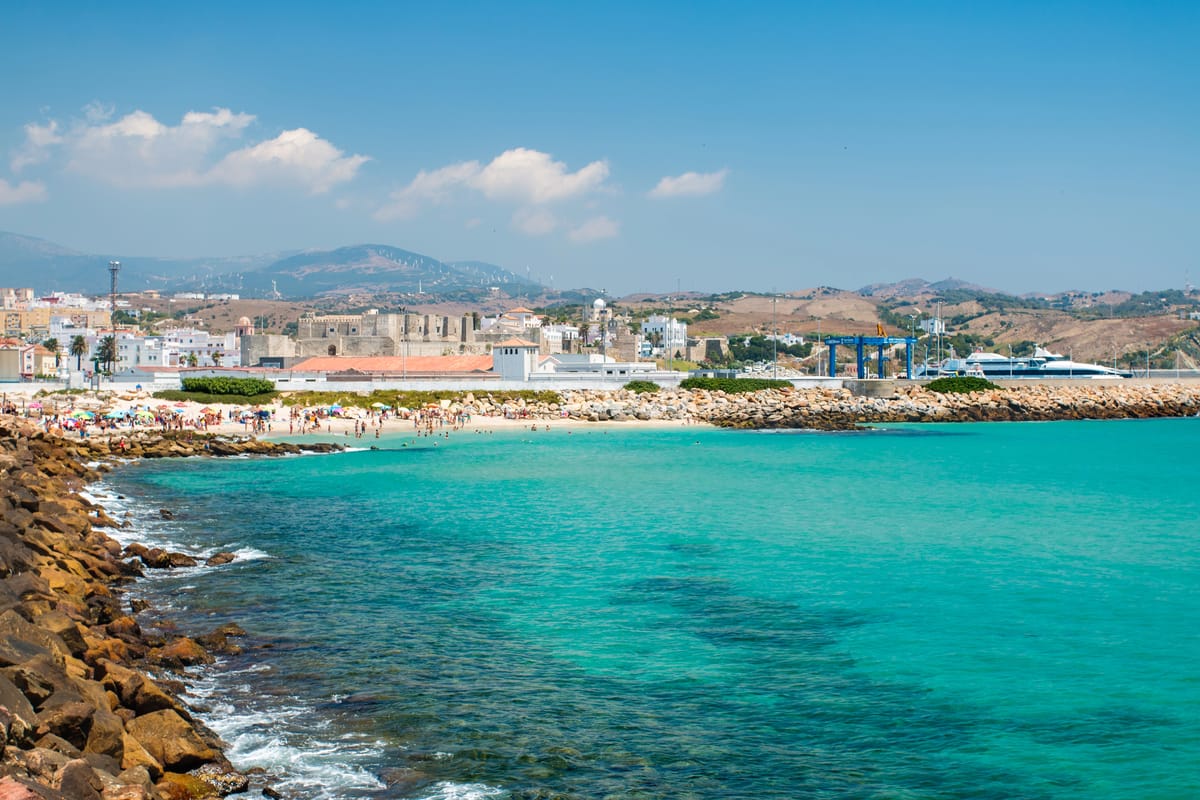
Tarifa, Algeciras and the surrounding coastline can be spectacular, with views across the water towards Morocco on a clear day. This area could be one of the most memorable places to experience the eclipse, especially if you like wild coastal scenery more than resort-style travel.
Granada coast and Almería: best for combining coast and quieter corners
The 2027 totality strip also crosses southern parts of Granada and Almería.
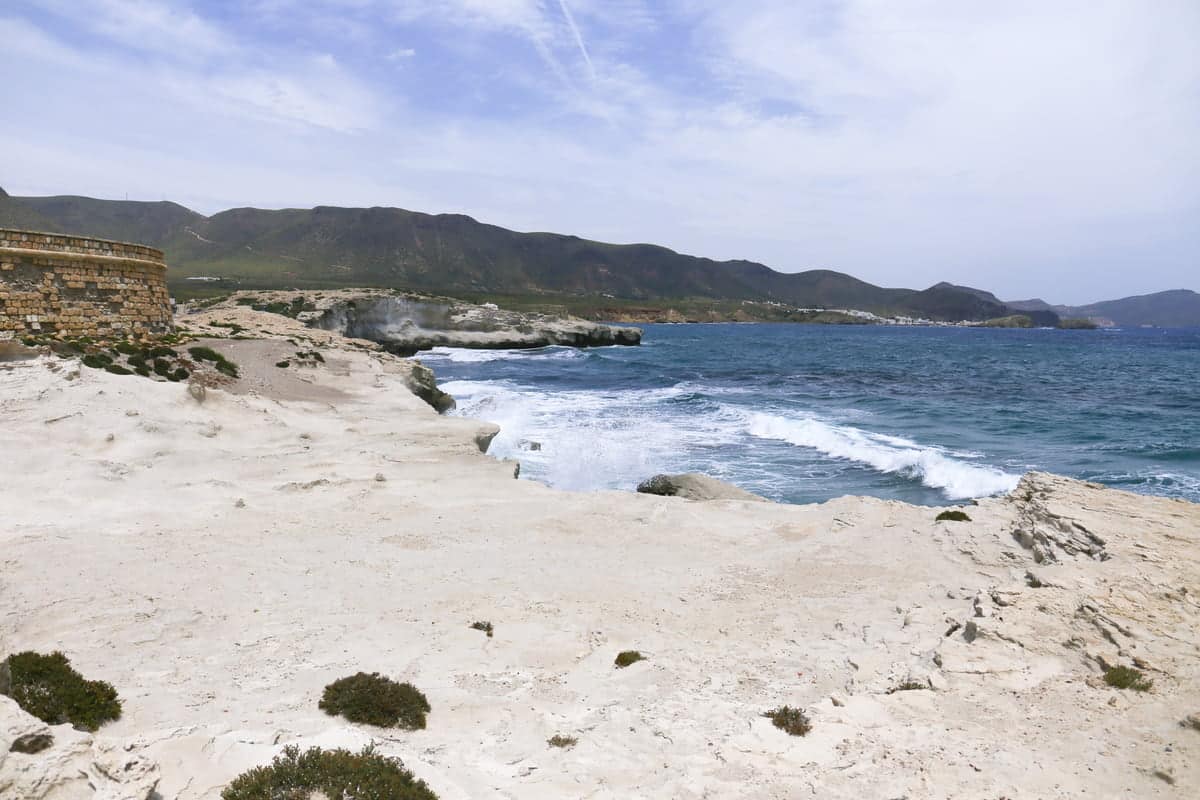
That makes the Costa Tropical and parts of coastal Almería worth considering, especially if you want a slightly different Andalusia trip. You could combine the eclipse with Granada city, the Alpujarras, Cabo de Gata or smaller coastal towns.
Before choosing a base here, check the official trajectory tool for the exact location you’re considering.

The 2028 annular eclipse in Andalusia: the “ring of fire”
Just a few months after the 2027 total eclipse, Andalusia gets another major event.
On 26 January 2028, Spain will see an annular solar eclipse. This is different from a total eclipse. During an annular eclipse, the Moon does not completely cover the Sun. Instead, a bright ring of sunlight remains visible around the Moon – the famous “ring of fire”.
For Andalusia, this is a very strong travel opportunity. The 2028 annular eclipse will cross much of the region, including areas such as Huelva, Seville, Cádiz, Málaga, Córdoba, Granada and Jaén.
The eclipse enters Andalusia through the Gulf of Cádiz at sunset, creating the possibility of a striking scene with the Sun appearing as a golden ring near the horizon. Almost all of Andalusia will experience annularity, except the southeastern strip of the province of Almería.
Why the 2028 eclipse is exciting for travellers
The 2028 eclipse has a completely different feel from the 2027 event.
The 2027 total eclipse happens in August, in the middle of Andalusia’s summer travel season. The 2028 annular eclipse happens in January, when Andalusia is quieter, cooler and often much easier to explore.
That means you can build a winter city break or road trip around the eclipse. Think Seville, Córdoba, Cádiz, Málaga or Granada – with fewer crowds than summer and a rare astronomical event as the highlight.
Best places in Andalusia for the 2028 annular eclipse
Again, exact viewing conditions will depend on your location, the horizon, the weather and official local guidance closer to the date. But based on the official Andalusia visibility summary, much of the region is relevant for 2028.
Seville: best for a winter city break
Seville is one of the best bases if you want culture, food, architecture and atmosphere around the eclipse.

January is also a much more comfortable time to explore the city than July or August. You can visit the Alcázar, the Cathedral, Triana, Plaza de España and local tapas bars, then plan your eclipse viewing around official recommendations closer to the date.
Cádiz and Huelva: best for the Gulf of Cádiz angle
The 2028 annular eclipse enters Andalusia through the Gulf of Cádiz, making the western side of the region especially appealing if you’re imagining a sunset eclipse experience.
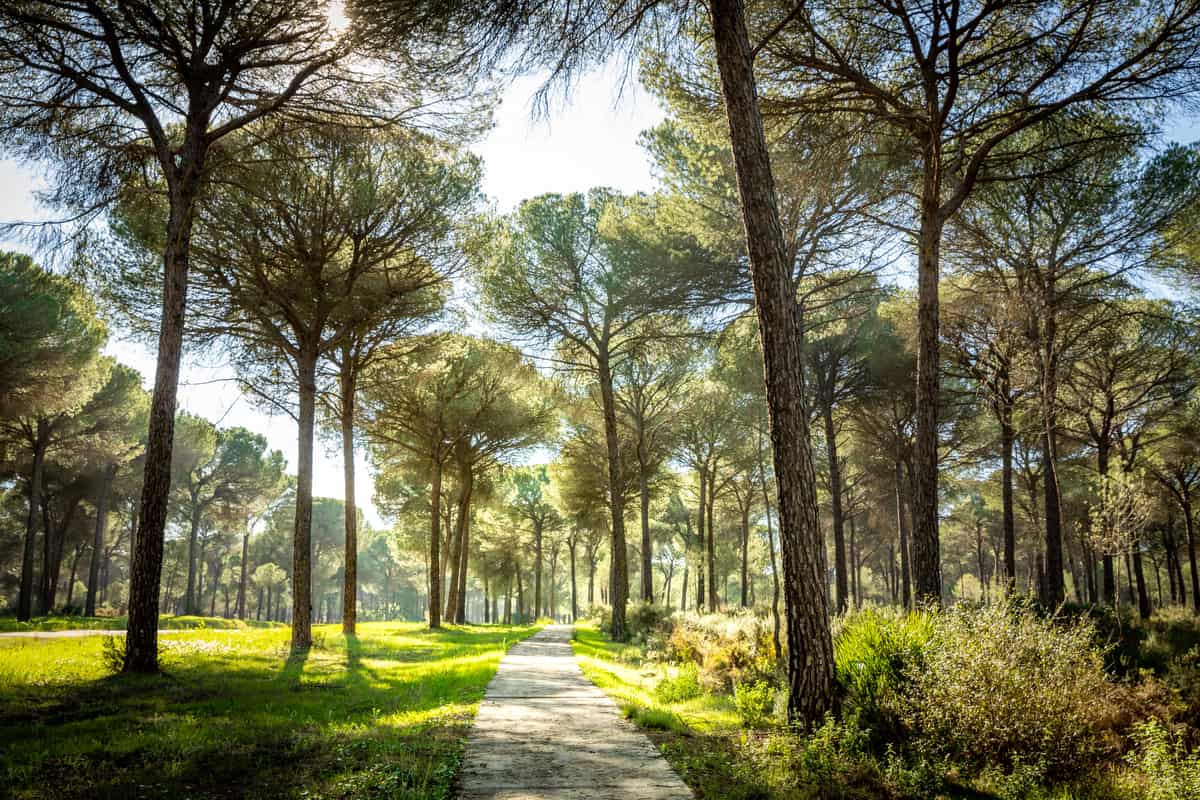
Cádiz, Huelva and nearby coastal areas could offer a beautiful mix of sea, sky and winter light.
Córdoba and Jaén: best for inland Andalusia
If you prefer historic towns and countryside over the coast, Córdoba and Jaén are worth considering.
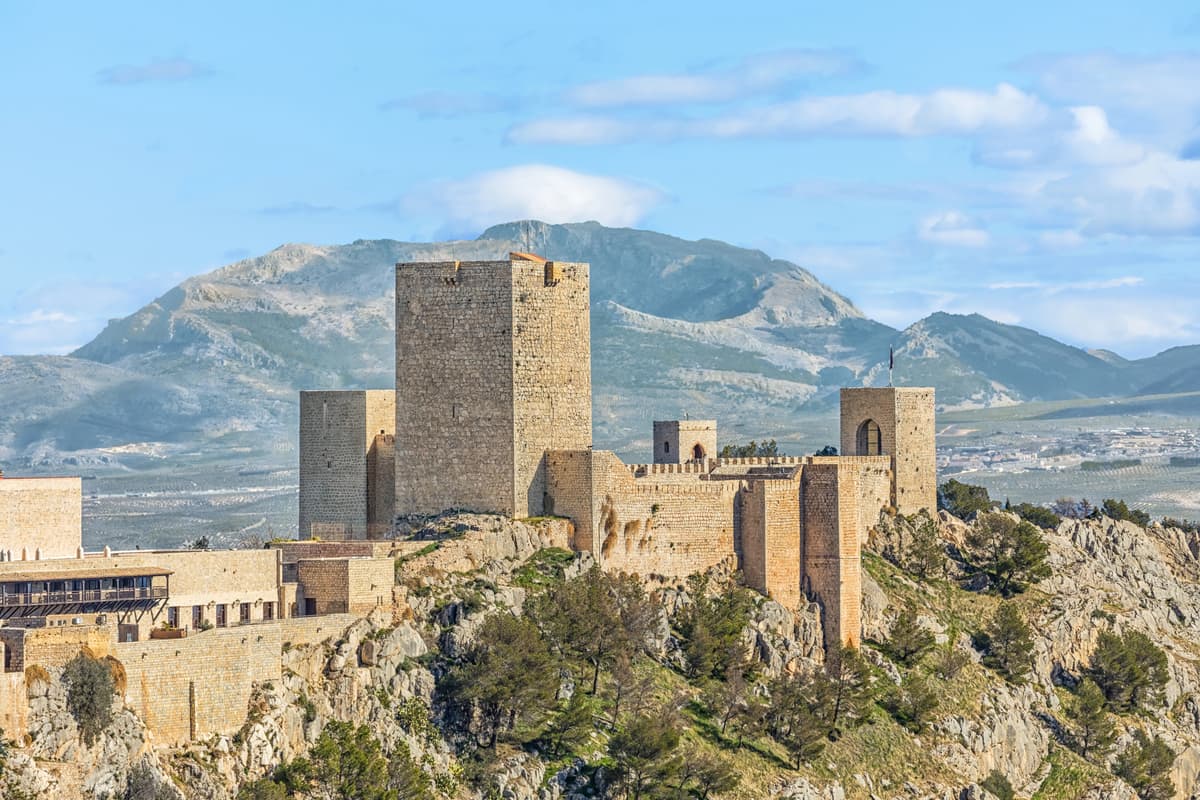
Córdoba gives you the Mezquita-Catedral, Roman history and excellent food. Jaén is ideal if you like olive groves, castles and a less obvious Andalusia itinerary.
Málaga and Granada: best for combining city, coast and mountains
Málaga and Granada are both strong bases for the 2028 eclipse.

Málaga gives you easy flights, beaches and museums. Granada gives you the Alhambra, Albaicín, tapas and views towards the Sierra Nevada. In January, you could even combine Granada with a winter mountain escape.
Where to be careful: southeastern Almería
Almost all of Andalusia will experience annularity in 2028, except the southeastern strip of Almería province.
So if you’re planning specifically for the ring of fire, don’t just book anywhere in Almería without checking the exact visibility first.
How to plan your eclipse trip to Andalusia
The eclipses may still feel far away, but for travel planning, especially for 2027, they’re not that far away at all.
The 2027 total eclipse falls on 2 August, right in the middle of peak summer season in Andalusia. Beach towns, resort areas and coastal cities are already busy at that time of year, even without a major astronomical event.
Here’s how to make your trip easier.
Book accommodation early
For the 2027 eclipse, book as early as you reasonably can. The most convenient coastal areas in Cádiz, Málaga and around the Strait of Gibraltar may become expensive or sell out.
For 2028, you may have more flexibility because January is low season, but the best eclipse-viewing areas could still see extra demand.
Find hotels in Andalusia (affiliate link).
Stay for more than one night
Don’t try to turn eclipse day into a stressful same-day trip.
Roads can get busy, local authorities may introduce special traffic measures, and you’ll enjoy the experience much more if you’re already based near your chosen viewing area.
For 2027, I’d recommend staying at least three nights. For 2028, a long weekend could work beautifully.
Check the official trajectory tool
Before you book a specific hotel or viewing location, use the official trajectory centre linked from the Official Spanish eclipse information webiste. It provides official trajectory information based on calculations by Spain’s National Astronomical Observatory.
This matters because a few kilometres can make a difference, especially if you want to be inside the best part of the eclipse path.
Think about the horizon
For the 2028 annular eclipse, the event happens close to sunset as the eclipse enters through the Gulf of Cádiz.
That means your view of the horizon could be important. A pretty old town street may be wonderful for dinner, but not necessarily ideal for watching a low Sun.
Look for open spaces, coastal viewpoints, elevated areas or recommended viewing points closer to the date.
Don’t overpack your eclipse day
It’s tempting to plan a full sightseeing day and squeeze the eclipse in somewhere. I wouldn’t.
Give yourself time. Arrive early, choose your spot calmly, bring water and snacks, and avoid relying on last-minute transport.
Watch responsibly, especially in natural areas
The August eclipses in 2026 and 2027 fall during Spain’s highest wildfire-risk season, so take extra care if you’re heading to rural, coastal or mountainous viewpoints. Follow local restrictions, avoid open flames, don’t smoke in natural areas, and never park on dry grass.
It’s also important to respect beaches, viewpoints, protected landscapes and historic sites. Stick to marked paths where they exist, don’t climb on monuments or fragile structures, take your rubbish with you, and choose official or clearly permitted viewing areas whenever possible.
How to watch a solar eclipse safely
This is the most important practical section of your trip.
You should never look directly at the Sun without proper protection. Normal sunglasses are not enough.
The official safety guidance says you should not use regular sunglasses, smoked glass, X-rays or old CDs to view an eclipse. Instead, you need certified eclipse glasses that meet the ISO 12312-2 standard and are not damaged or expired.
Before using eclipse glasses, check them carefully. If they are scratched, torn, pierced or damaged, don’t use them.
Be especially careful with cameras, binoculars and telescopes. Never look at the Sun through any optical device unless it has a proper professional solar filter fitted to the front of the lens. Eclipse glasses alone are not enough when using magnifying equipment.
Before eclipse day, check the official eclipse safety recommendations, especially if you plan to use cameras, binoculars or telescopes.
Can you remove eclipse glasses during totality?
For the total eclipses in 2026 and 2027, the official guidance says it is only safe to remove eclipse glasses during the minutes of absolute totality, when the Moon covers 100% of the Sun. As soon as the first ray of sunlight appears again, you need to protect your eyes immediately. The same official guidance also says the recommended approach is to keep the glasses on.
For most travellers, especially if this is your first eclipse, the safest advice is simple: follow official instructions on the day and don’t take risks.
For the 2028 annular eclipse, keep your glasses on the whole time
This is very important.
During an annular eclipse, the Sun is never fully covered. Even at the maximum point, the bright “ring of fire” is still direct sunlight.
That means you must keep proper eclipse glasses on for the entire event.
Suggested Andalusia eclipse itineraries
Here are a few easy ways to turn the eclipses into a proper Andalusia trip.
3 days in Málaga for the 2027 total eclipse
Best for: easy logistics, beaches, first-time visitors
Spend your first day exploring Málaga’s old town, the Alcazaba and the port area. Use your second day for the eclipse, keeping the schedule relaxed. On your final day, visit a nearby beach town, take a food tour or head inland for a day trip.

This is a good option if you want convenience and don’t want to rent a car.
4 days in Cádiz and Tarifa for the 2027 total eclipse
Best for: coastal atmosphere, Atlantic beaches, dramatic landscapes
Base yourself in Cádiz, Tarifa or somewhere nearby, depending on exact visibility and accommodation. You can explore Cádiz city, visit white villages, enjoy the beaches and make the eclipse the centrepiece of the trip.
The Strait of Gibraltar area is especially interesting if you want big coastal scenery and a memorable setting.
5 days in Seville, Córdoba and Cádiz for the 2028 annular eclipse
Best for: winter culture trip
Start in Seville, continue to Córdoba, then finish in Cádiz or another Gulf of Cádiz location for the eclipse. This gives you a beautiful mix of architecture, food, history and winter light.

Because the 2028 eclipse happens in January, this itinerary is likely to feel much calmer than a summer trip.
One-week Andalusia eclipse road trip
Best for: seeing more of the region
For 2027, you could plan a route along the southern coast, choosing your final eclipse base after checking the official trajectory tool.
For 2028, you could create a loop through Seville, Córdoba, Granada, Málaga and Cádiz, depending on which viewing area you choose.
Compare car hire prices for your road trip (affiliate link).
Just don’t make the eclipse day itself a long driving day. Pick your base in advance and stay put.
Quick questions about Spain’s eclipses from Andalusia
When are the three solar eclipses in Spain?
The three eclipses are on 12 August 2026, 2 August 2027 and 26 January 2028. The first two are total solar eclipses, while the 2028 event is an annular solar eclipse.
Which eclipse is best to see from Andalusia?
The 2027 total solar eclipse is the main event for Andalusia. The path of totality crosses southern parts of the region, including areas of Cádiz, Málaga, Granada and Almería.
Will Andalusia see the 2026 eclipse?
Yes, but not as a total eclipse. Andalusia will see the 2026 eclipse as a very deep partial eclipse, with more than 90% obscuration in most of the region according to the official Andalusia page.
Is the 2028 eclipse in Andalusia total?
No. The 2028 eclipse is annular, not total. That means you may see a bright “ring of fire” around the Moon, but the Sun is never fully covered.
Can I watch the eclipse with normal sunglasses?
No. Normal sunglasses are not safe for viewing a solar eclipse. You need certified eclipse glasses that meet the ISO 12312-2 standard.
Final thoughts: why Andalusia is one of the best places for Spain’s eclipse trilogy
You don’t have to be an astronomy expert to enjoy these eclipses.
You just need the right place, the right timing and the right eye protection.
For Andalusia, the real highlights are clear: the 2027 total solar eclipse along the southern coast and the 2028 annular eclipse across much of the region. One gives you the rare experience of day turning into night in the middle of summer. The other brings a winter “ring of fire” to the Andalusian sky.
Plan early, choose your base carefully, check the official trajectory information, and give yourself enough time to enjoy the trip around the eclipse itself.
Because seeing an eclipse is unforgettable – but seeing one while travelling through Andalusia? That’s something very special.