
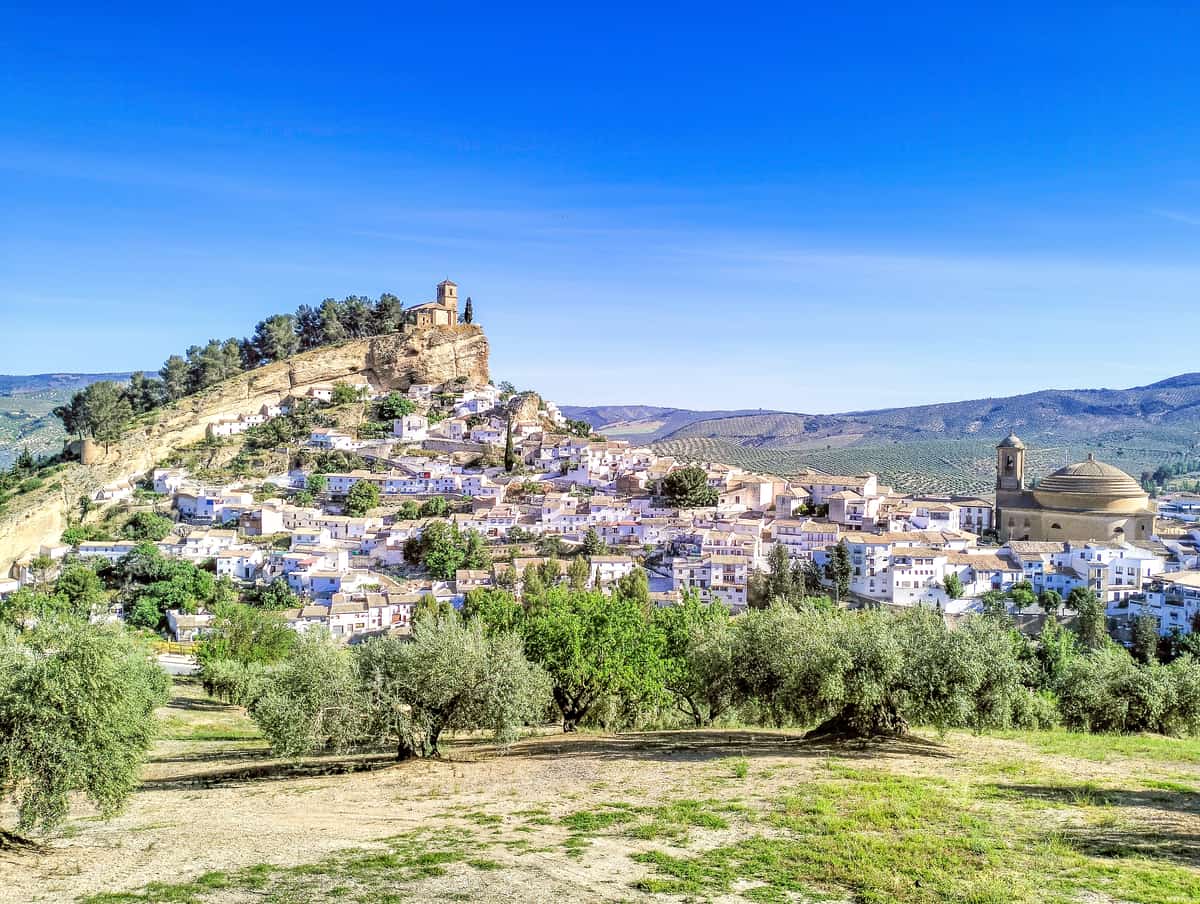
If you’ve ever seen that iconic photo of a hilltop church rising above a sea of whitewashed houses, framed by olive groves that stretch endlessly into the horizon – you’ve already met Montefrío. This little town in Granada province was once featured by National Geographic as having one of the most beautiful views in the world. And honestly? They weren’t exaggerating.
Montefrío isn’t just about the view, though. Spend a day (or even a night) here and you’ll discover history carved into the rock, olive oil that tastes like liquid gold, and some of the most welcoming tapas bars in Andalusia. Here’s how to experience it best.
DISCLOSURE: This page contains affiliate links. If you make a purchase via one of those links, we will earn a commission at no extra cost for you.
Why Montefrío Is Famous for Its View
The National Geographic Lookout Point
In 2015, National Geographic named Montefrío’s panorama one of the ten most beautiful in the world. Since then, the Mirador National Geographic has become a must-visit spot. From here, you see the entire town spread out below: the castle-topped hill, the domed round church, and olive groves rippling into the horizon.

But that’s not all. It looks like National Geographic has a hot spot for Montefrío, as in 2020 it was selected as one of the most beautiful villages in Spain and in 2022 it was featured as one of the best places to visit in the world.
Getting there: The viewpoint sits on the road leading out of town toward Tocón. There’s a small parking area, and it’s about a 5-minute drive or 15–20 minute uphill walk from the center.
Tip: The best way to visit Montefrío is to rent a car in Granada (affiliate link) and go there on a day trip. Although the village has got so many attention in the last years, it’s not overcrowded and you won’t find any organized tours. And maybe for the best.
Top Things to Do in Montefrío
Here’s a handy map of the locations of all landmarks and things to do in Montefrío. You can download it and use it offline.
1. Climb to the Castle and Iglesia de la Villa
The castle, originally a Moorish fortress, built in the 14th century, played a crucial role in defending the Nasrid kingdom of Granada. Later, it was converted into a defensive and religious site, housing the Iglesia de la Villa. As you walk through its remains, you’ll sense how important Montefrío once was as a frontier town during centuries of conflict.

Perched on the highest rock in town, the Iglesia de la Villa was built in the 16th century on the site of the Moorish fortress. The church itself is striking, with Gothic-Mudejar elements, but the real reward is wandering through the ruins of the old castle walls.
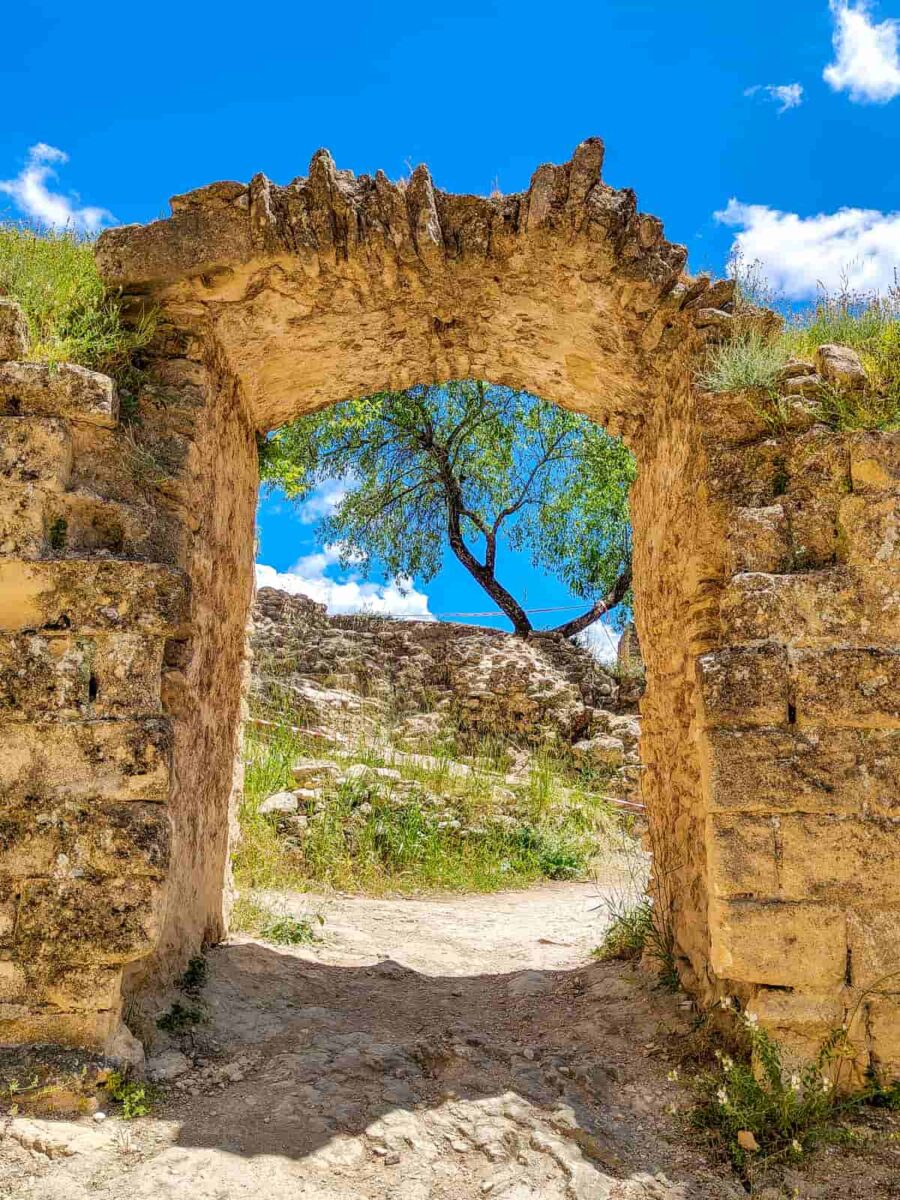
The church houses El Centinela, an Interpretation Cente, where history is brought to life, helping you understand the role Western Granada played in the final days of Al-Andalus. Montefrío, together with some other places, like Íllora, Loja, and Moclín among others, was part the last frontier of the Moorish Kingdom.
Read more: Hidden Gems Near Granada: 5 Lesser-Known Villages You Shouldn’t Miss: Íllora, Moclín, Montefrío, Monachil, and Colomera

Practical info: El Centinela Interpretation Center
Admission fee: 2 EUR; You can visit the fortress free of charge
Opening times: Tuesday-Friday: 10:30-14:00; Saturday-Sunday: 13:30-14:00 and 16:00-18:00 (16:30-18:30 in the summer)
Getting there: From the town center, it’s a steep but short climb (10–15 minutes) up narrow cobbled streets.
2. Pass by The Pantheon
If you take the road towards the Iglesia de la Villa you will come across the remains of Montefrío’s old cemetery, The Pantheon. Sixteen niches or family tombs are still visible here, once reserved for the wealthiest families of the village.
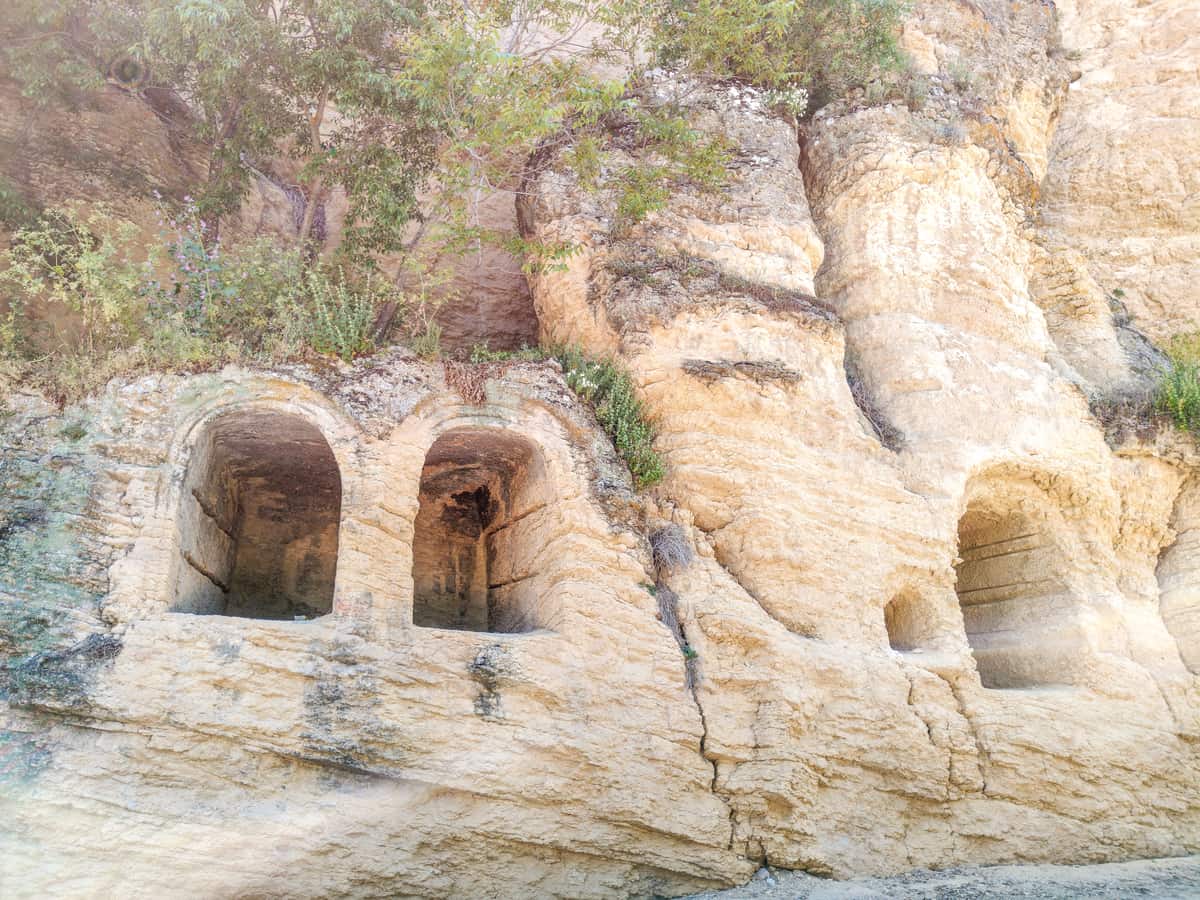
The cemetery stood just outside the old village walls. While its origins are debated, it may have existed as early as the late 1500s. What we do know is that it was in use from the 18th century until the late 19th century, when burials were moved to a new site a few kilometers away.
Most graves are vaulted chambers framed by double semicircular arches with fine decorative details. Many are surprisingly large, about two meters deep, over 1.5 meters high, and more than one meter wide. Some are even interconnected, with space for up to three burials in the same tomb. Smaller chambers were set aside for children.
3. Stroll Through the Barrio del Arrabal
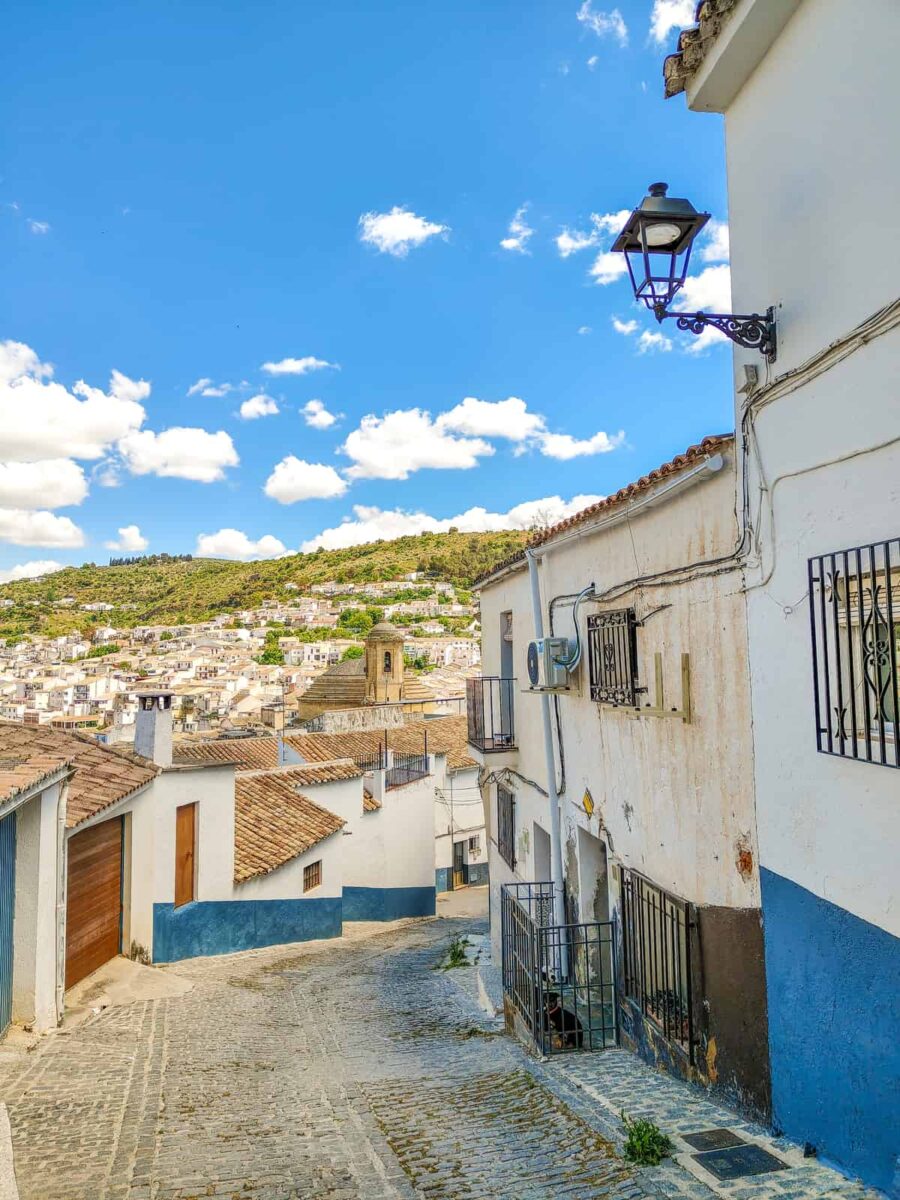
As you wander away from Montefrío’s main square, make sure to lose yourself in the narrow streets of the Barrio del Arrabal. This was the first neighborhood built outside the medieval walls, and it still keeps its traditional Andalusian character.
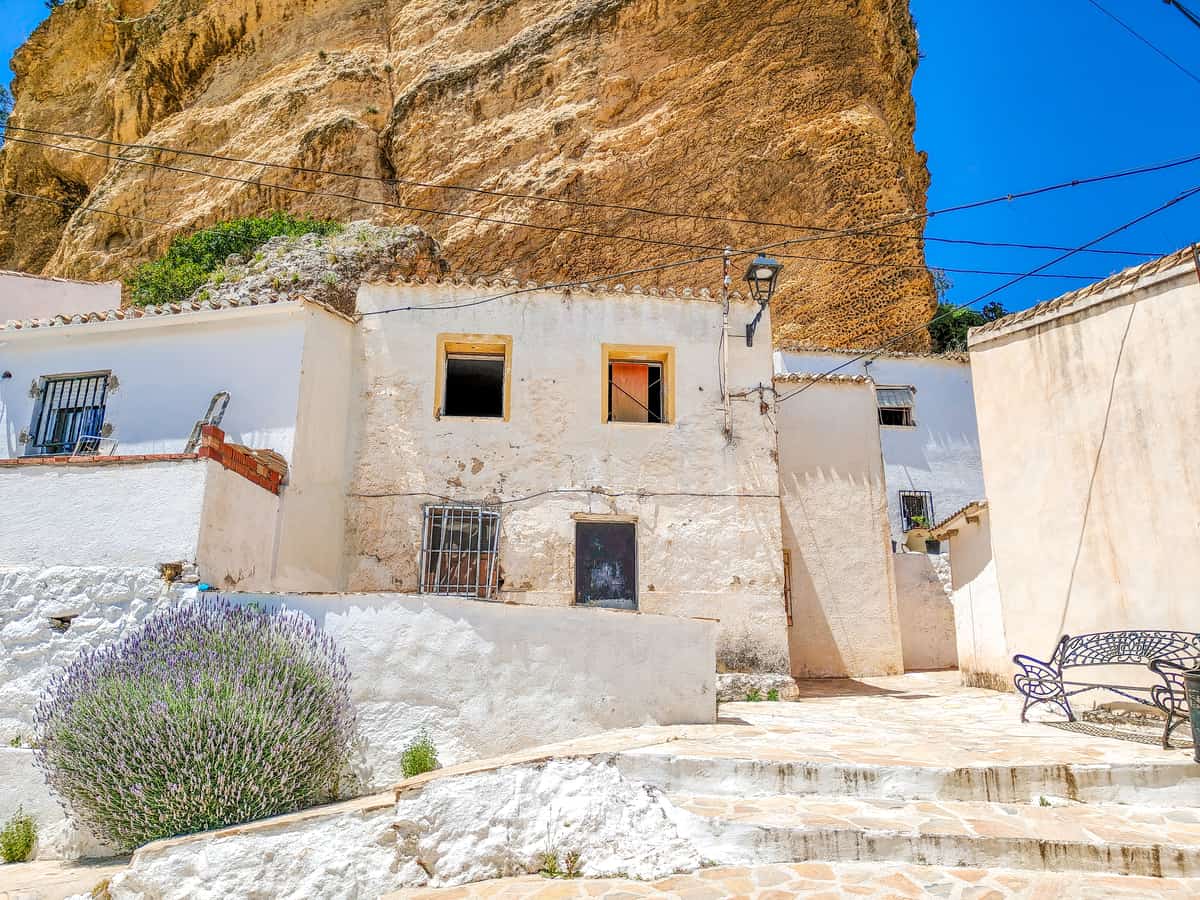
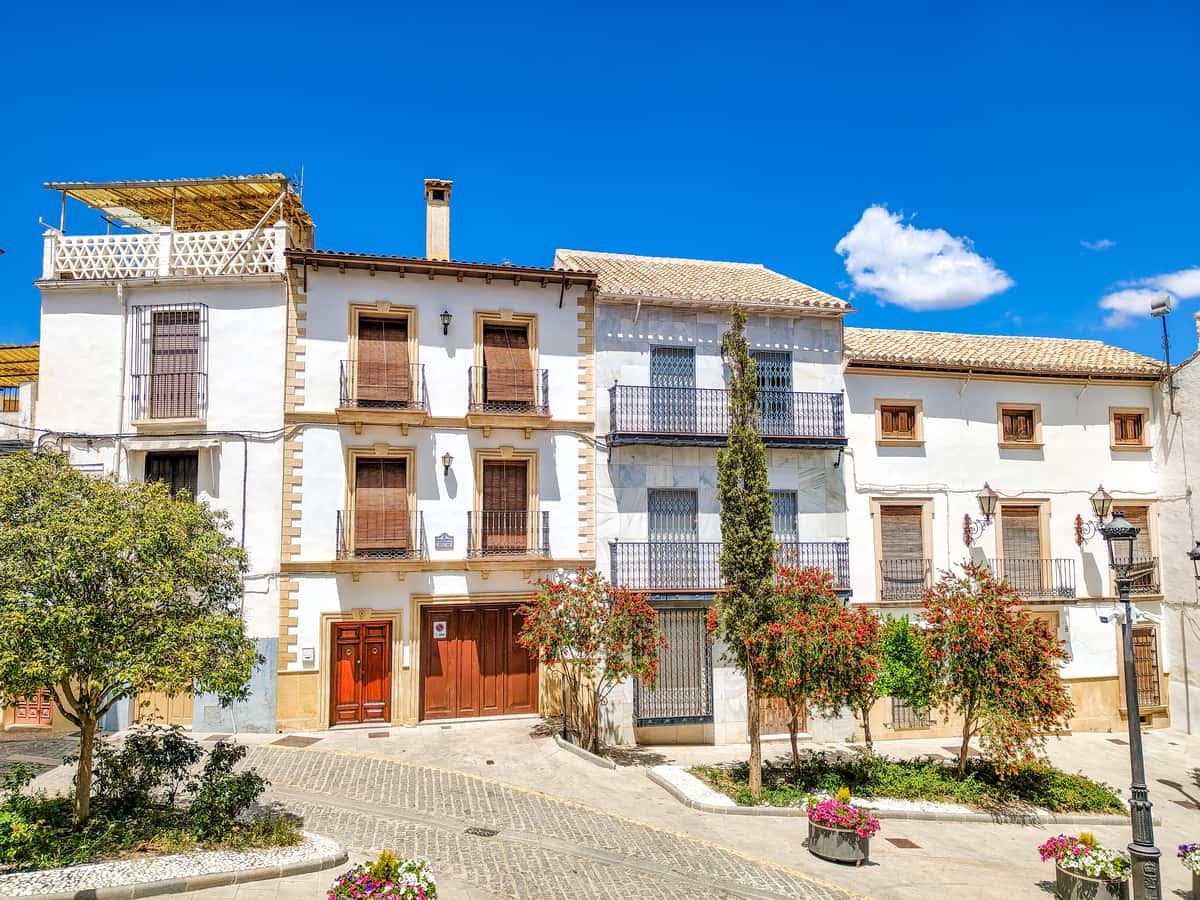
You’ll walk past whitewashed houses with flower-filled balconies, winding lanes that suddenly open up to little squares, and quiet corners where time seems to stand still. The layout of the streets reflects the town’s Moorish past, with irregular alleys designed both for shade and defense.
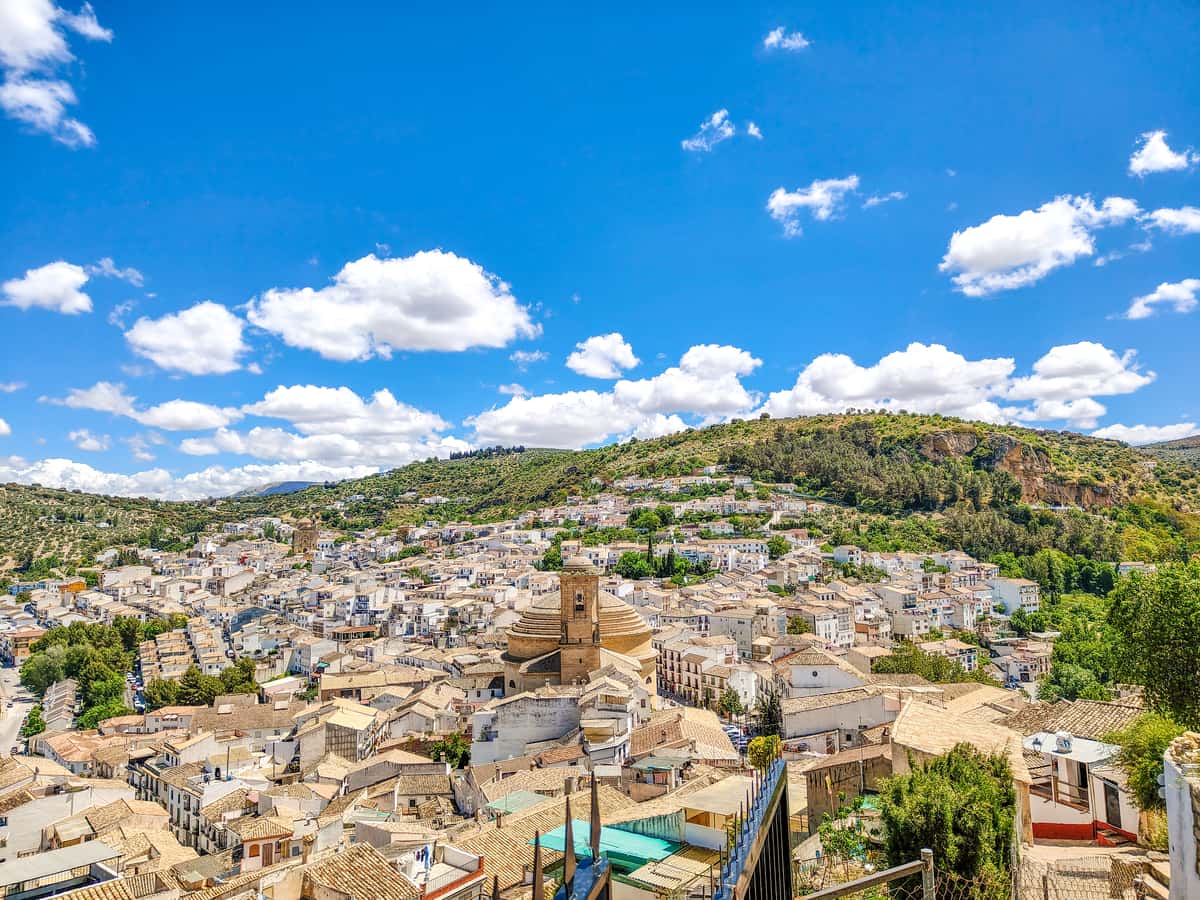
Don’t rush through this part of town, half the charm is simply slowing down and soaking in the details. From certain points you’ll get glimpses of the Church crowning the hill above, and if you turn around you’ll get a mesmerizing view of the town.

4. Visit the Round Church (Iglesia de la Encarnación)
Montefrío’s most unusual landmark is the Iglesia de la Encarnación, the only perfectly round church in Spain. Its enormous dome, over 30 meters wide, was inspired by Rome’s Pantheon and designed by Ventura Rodríguez, one of the most important architects of 18th-century Spain. Inside, the acoustics are so remarkable that concerts are sometimes held here.

Practical info: Iglesia de la Encarnación
Opening times: Monday-Saturday: 9:30-13:30; Sunday: 11:00-13:30
Getting there: Located on Plaza de España, in the town center
5. See The Royal Grain Warehouse
At the end of the 18th century, Montefrío built an impressive Royal Grain Warehouse, designed by architect Francisco Aguado in 1795. As you step inside, you’re walking into a piece of history that once served a very practical purpose – this was where the town stored its grain supplies.

The façade is deliberately austere: just a doorway topped with a lintel and the date of construction carved in relief. Above the entrance, look up and you’ll notice the Bourbon coat of arms, a reminder of the political power of the time.
Today, the building has a new life as Montefrío’s Centre of Culture, where exhibitions and events are held.
6. Walk to the Church of San Antonio & Convent of San Antonio
When the Church of San Antonio was built between 1737 and 1763, it stood just outside of Montefrío. This charming late-Baroque church was dedicated to San Antonio de Padua.
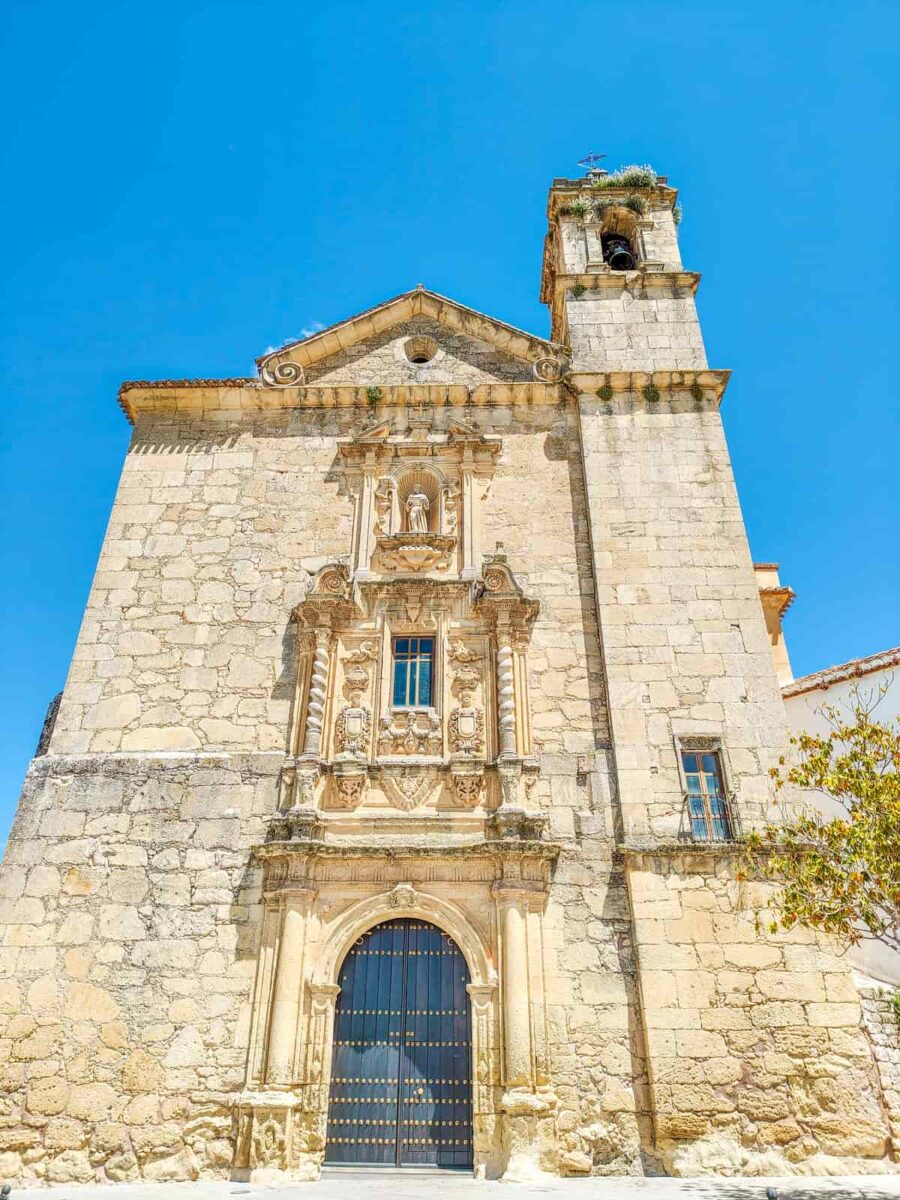
Right next door, is located the Convent of San Antonio which initially offered home to the Franciscan order. Through the centuries the convent changed hands quite often and served various purposes. At one point it even housed a bakery!
Today, the restored building belongs to the Town Council and serves as a vibrant cultural hub, hosting exhibitions and events that celebrate Montefrío’s heritage.

From the square in front of the church there is yet another magnificent view of Montefrío.
7. Discover Montefrío’s Olive Oil Tradition
Olive oil is the lifeblood of Montefrío. For centuries, families here have cultivated olives and pressed them into what locals proudly call oro líquido – liquid gold.

You can visit the Museo del Olivo (Olive Oil Museum) or book a tour of a working almazara (olive mill) to see the process and taste the freshest oil you’ve ever tried.

Practical info: Olive Oi Museum
Address: C/ Manuel Ávila S/n 18270 Montefrío
Opening times: Monday-Friday: 9:00-14:00
8. Explore the Other Miradores (Viewpoints)
Beyond the main viewpoint, Montefrío has several other scenic lookouts:
- Mirador Lorenzo Bohme – lovely view of the town from the foothill
- Mirador de las Peñas-Francisco Adamuz – dramatic perspective of the hillside houses.
- Mirrador Carretera de Tócon – perfect for sunset photos

- Mirador on the road from Tócon
- Mirador del Arrabal – beautiful view of the Round Church and the Church of San Antonio
- Mirador de los Olivos – just outside of the town on the road to Puerto Lopez
- Mirador Placeta del Convento – yet another beautiful view of the hilltop fortress and the Church of La Villa
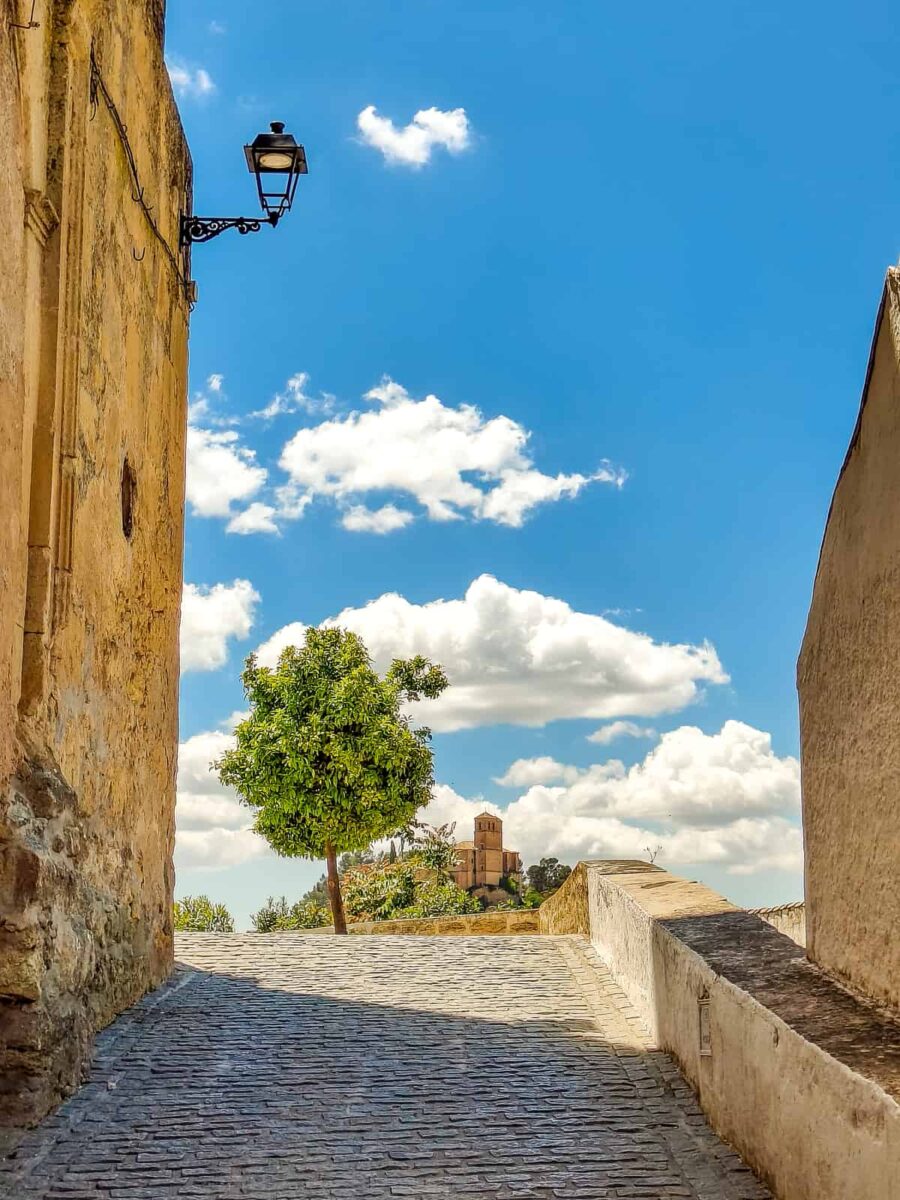
Check the Google map above for the exact locations of the lookouts.
9. Enjoy Tapas in the Town Center
After sightseeing, head to Plaza de España for tapas. Order a drink and you’ll be served a tapa for free, just as in Granada. Dishes to try include choto al ajillo (garlic kid goat), hearty stews, and local cheeses with Montefrío’s olive oil.
Staying Overnight in Montefrío
If you stay the night, you’ll have Montefrío almost to yourself once the day-trippers leave. There are charming traditional houses in town and cortijos (farmhouses) just outside, surrounded by olive groves.
If you want something truly unique, stay in one of the houses at the foot of the castle or in the old neighbourhood Arrabal.
Tip: Check TripAdvisor (affiliate link) for the reviews and to compare prices.
How to Get to Montefrío
Driving to Montefrío
Montefrío is best reached by car. It’s about 1 hour from Granada, 1h15 from Córdoba, and 1h30 from Málaga. A car also lets you combine Montefrío with nearby gems like Priego de Córdoba or Iznájar.
Tip: Find the best deals for car hire in Granada (affiliate link).
Taking the Bus from Granada
Daily buses run between Granada and Montefrío (around 1h15). It’s a good budget option, though timetables are limited.
Read more: How to spend one day in Granada
Tips for Visiting Montefrío
- Stay for the views – Even if you come just for a day, don’t rush. Montefrío is best appreciated slowly, with time to enjoy the landscapes that made National Geographic list it among the world’s most beautiful villages.
- Museum hours are limited – Most of Montefrío’s museums and cultural spaces open only in the mornings, usually until around 14:00. Plan your sightseeing early in the day so you don’t miss out.
- Siesta time means closures – Like in many Andalusian towns, the afternoon siesta is taken seriously here. Between roughly 14:00 and 17:00, you’ll find that most shops, attractions, and even some restaurants close their doors. Use this time to relax, enjoy a leisurely lunch, or simply soak up the views.
- Best way to get there – There are no direct tours or regular bus connections from Granada to Montefrío. The easiest way to visit is by renting a car, which also gives you the freedom to explore nearby villages and viewpoints at your own pace. The drive from Granada takes just under an hour.
- Wear comfortable shoes – Montefrío is built on hills, and many of its streets are steep and cobbled. Good walking shoes will make your visit much more enjoyable.
Final Thoughts on Visiting Montefrío
Montefrío deserves its reputation as one of the most beautiful villages in the world. The iconic view is reason enough to come, but what makes your visit memorable is the blend of history, architecture, and local traditions. Whether you’re wandering through castle ruins, standing under the dome of the round church, or sipping olive oil in a rustic mill, Montefrío will stay with you long after you’ve left.
For many, it’s a perfect day trip from Granada. For others, it becomes the highlight of an Andalusian road trip. Either way, Montefrío proves that some of Spain’s greatest treasures are hidden in its smaller villages.