
Jerez is one of Andalusia’s most distinctive cities. Sherry, Andalusian horses and flamenco are the associations that usually come first, but they are only part of its character.
The city has developed in layers. The Islamic past survives in the Alcázar and the street pattern of the old centre. Churches and the cathedral tell the story of Christian Jerez, while the wine trade brought merchants, money and the grand houses that still line its streets. Flamenco is closely tied to neighbourhoods such as Santiago and San Miguel, and the city’s food culture has grown alongside its sherry traditions.
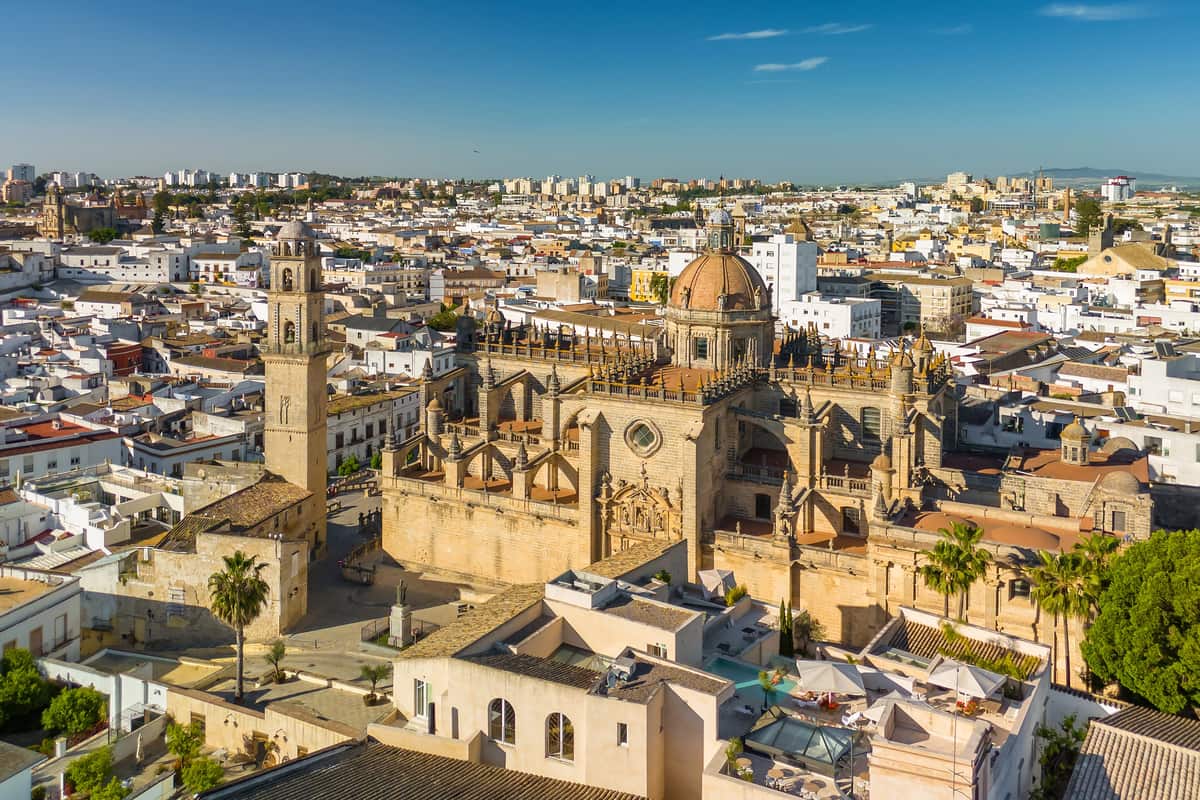
Many of the best things to do in Jerez de la Frontera reveal one of these layers. Spend some time moving between them and Jerez becomes much more interesting than a checklist of bodegas and monuments.
DISCLOSURE: This page contains affiliate links. If you make a purchase via one of those links, we will earn a commission at no extra cost for you.
How to get to Jerez
Jerez is just inland from the Bay of Cádiz, with good connections to Cádiz and Seville. It is easy to include on a wider trip through western Andalusia by car, public transport or plane.
By car
A car is useful if you plan to explore the smaller towns, beaches and countryside of Cádiz province. For Jerez itself, it is not essential, as most of the main sights are in or around the historic centre.
By public transport
Direct trains connect Jerez with Cádiz and Seville, and the railway station is within walking distance of the historic centre.
The bus station is next to the railway station, with services across Cádiz province and longer-distance connections to cities such as Seville, Málaga and Madrid.
By air
Jerez Airport is about 10 km from the city, with the train to Jerez railway station taking roughly nine minutes. The airport has domestic routes and seasonal international connections, particularly to Germany, the UK and Switzerland.
Seville Airport is the main alternative, with a much wider network of domestic and international flights. From Seville, you can continue to Jerez by train, bus or rental car.
On a day tour from Seville
Organised day trips from Seville are another option. Some focus on sherry and horses, while others combine Jerez with Cádiz. They are useful if you prefer to have transport and timed visits arranged for you.
Best things to do in Jerez
The main sights in Jerez are concentrated around the historic centre, although a few sit slightly farther out. The map below marks the places covered in this guide so you can see which ones are easy to combine while planning your day.
1. Visit a sherry bodega
Sherry is not simply something produced in Jerez. It has shaped the economy, architecture and development of the city for centuries, and the large bodegas are still a defining part of the urban landscape. Their high ceilings and vast interiors were designed to create the right conditions for ageing wine, while the international wine trade brought English, French, Flemish and Italian merchants to Jerez and helped create much of the wealth that shaped the city.
A bodega tour is the easiest way to understand how sherry is made and why the different styles can taste so different from one another. One of the key concepts is the criaderas y solera system, in which wines of different ages are gradually blended through rows of barrels to maintain a consistent house style over time. A dry fino, for example, is very different from a richer oloroso or the intensely sweet Pedro Ximénez.
There is no single bodega that is automatically the best choice, because the visits are quite different. Tío Pepe, part of González Byass, suits a first-time introduction to sherry, with a large historic complex beside the Alcázar and a tour that covers both the wine and the story of one of Jerez’s most famous producers. Lustau feels more focused on the wines themselves, making it a better choice if you want to spend more time comparing sherry styles and understanding how they differ.

At Bodegas Tradición, the focus is on mature sherries and a collection of Spanish paintings displayed inside the bodega, so the visit combines wine with art in a way that feels very different from the larger commercial houses. Fundador (affiliate link)is a better fit if you are also interested in Jerez’s brandy tradition, with a visit that moves through historic cellars, old production spaces and landscaped gardens.
Most bodega tours run at fixed times, so it is worth choosing your visit before planning the rest of the day, especially if there is one producer you particularly want to see.
2. See Jerez’s famous Andalusian horses
The Andalusian horse is one of the strongest symbols of Jerez, and the Royal Andalusian School of Equestrian Art (Real Escuela Andaluza del Arte Ecuestre) is the best place to understand why. The school is not simply a performance venue. It is a working equestrian institution where horses are trained in classical and traditional Spanish riding disciplines, and much of the visit revolves around seeing that tradition in practice.

Its best-known show is How the Andalusian Horses Dance (affiliate link) (Cómo Bailan los Caballos Andaluces), a performance of around 90 minutes in which riders and horses move through a series of choreographed exercises set to music. The appeal is not only the spectacle itself, but also the precision and control involved. Even if you are not especially interested in horses, it gives a good introduction to a part of Andalusian culture that is closely associated with Jerez.

Performances do not take place every day, so check the official calendar before planning your visit. If the show does not fit your schedule, it is still possible to visit the school and see the grounds, museums and equestrian facilities, depending on the programme available that day.
There is more to see than the show. The complex includes stables and training areas, along with the Equestrian Art Museum (Museo del Arte Ecuestre) and Carriage Museum (Museo del Enganche), where the focus shifts from performance to the wider history of horsemanship, riding equipment and historic carriages.

Horse culture is also at the heart of the annual Horse Fair (Feria del Caballo), one of Jerez’s biggest celebrations and a Fiesta of International Tourist Interest. Its roots lie in a livestock market, but today the fair combines horses, sherry, flamenco and food. The equestrian programme includes the traditional parade of horses and carriages as well as competitions in classical and doma vaquera riding, carriage driving and horse breeding.
3. Explore the Alcázar
The Alcázar de Jerez is one of the best places to understand the city’s Islamic past because so much of the original complex still survives. Most of what you see today dates from the 12th-century Almohad period, when Jerez was part of Al-Andalus, and the site preserves much more than defensive walls.
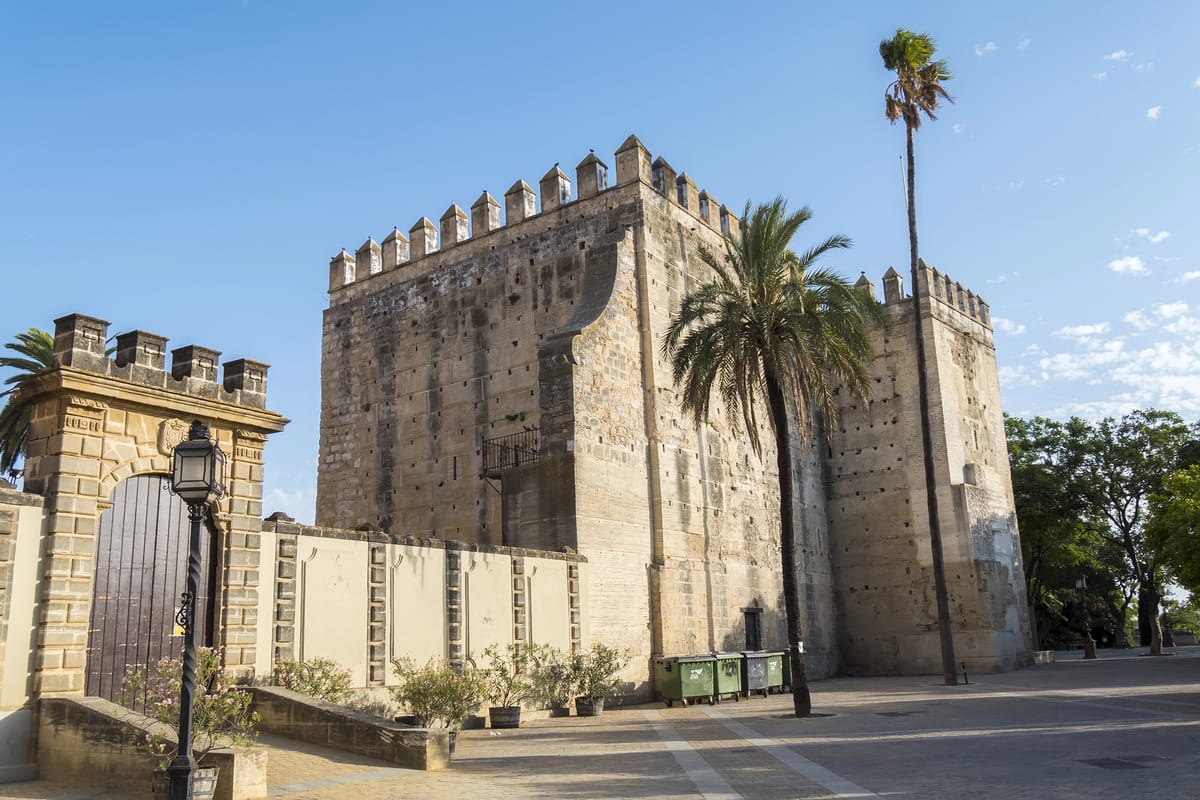
Inside, you can move between the former mosque, Arab baths, towers and fortifications, with gardens linking the different parts of the complex. These spaces show how the Alcázar functioned not only as a military stronghold, but also as a place of worship, residence and daily life.
The later Villavicencio Palace (Palacio de Villavicencio) adds another layer to the site, showing how the Alcázar continued to evolve after the Christian conquest. That mix of Islamic and later architecture is what makes the complex especially interesting for understanding how Jerez changed over time.
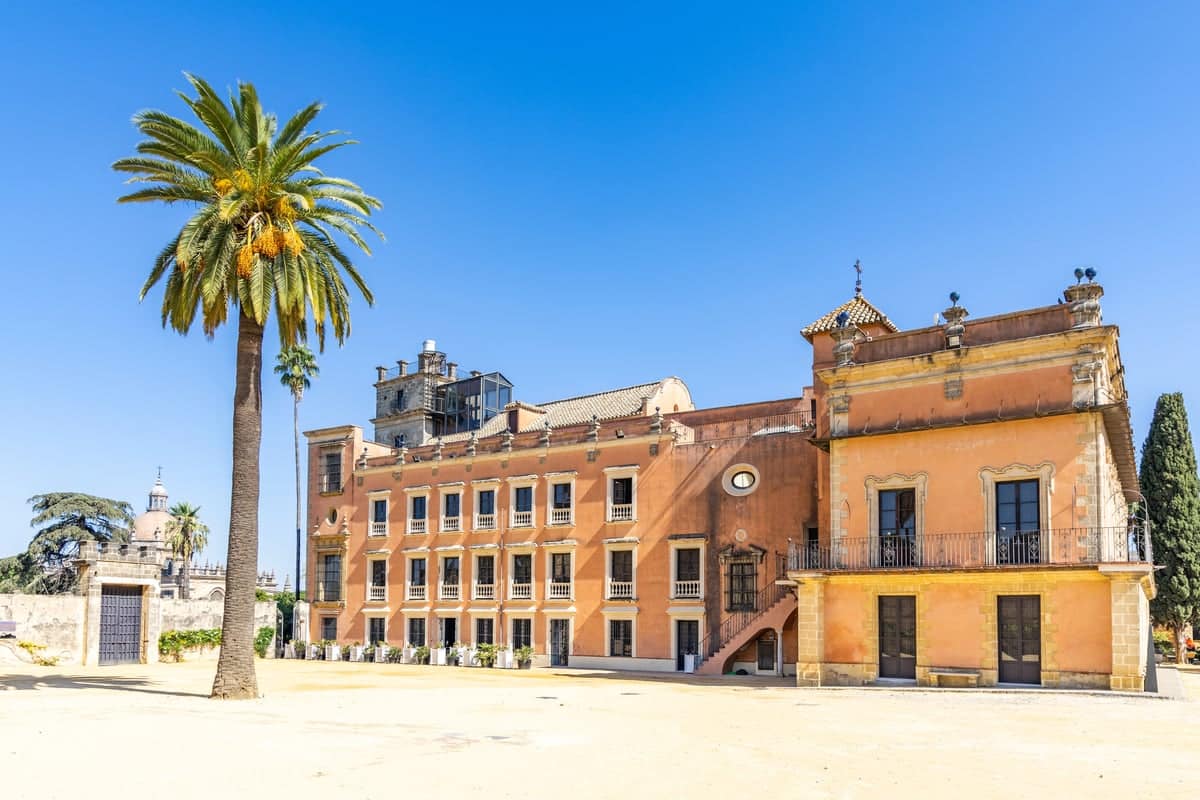
Allow enough time to explore properly. This is not a quick castle stop, and visiting the Alcázar early in your stay helps make sense of the churches, bodegas and palaces you will encounter elsewhere in the historic centre.
4. Visit Jerez Cathedral
A short walk from the Alcázar brings you to Jerez Cathedral (affiliate link) (Catedral de Jerez), and the contrast between the two landmarks says a lot about the city’s history. The cathedral belongs to a much later period, with construction beginning in the late 17th century, and its design combines Gothic, Baroque and Neoclassical elements rather than following a single architectural style.
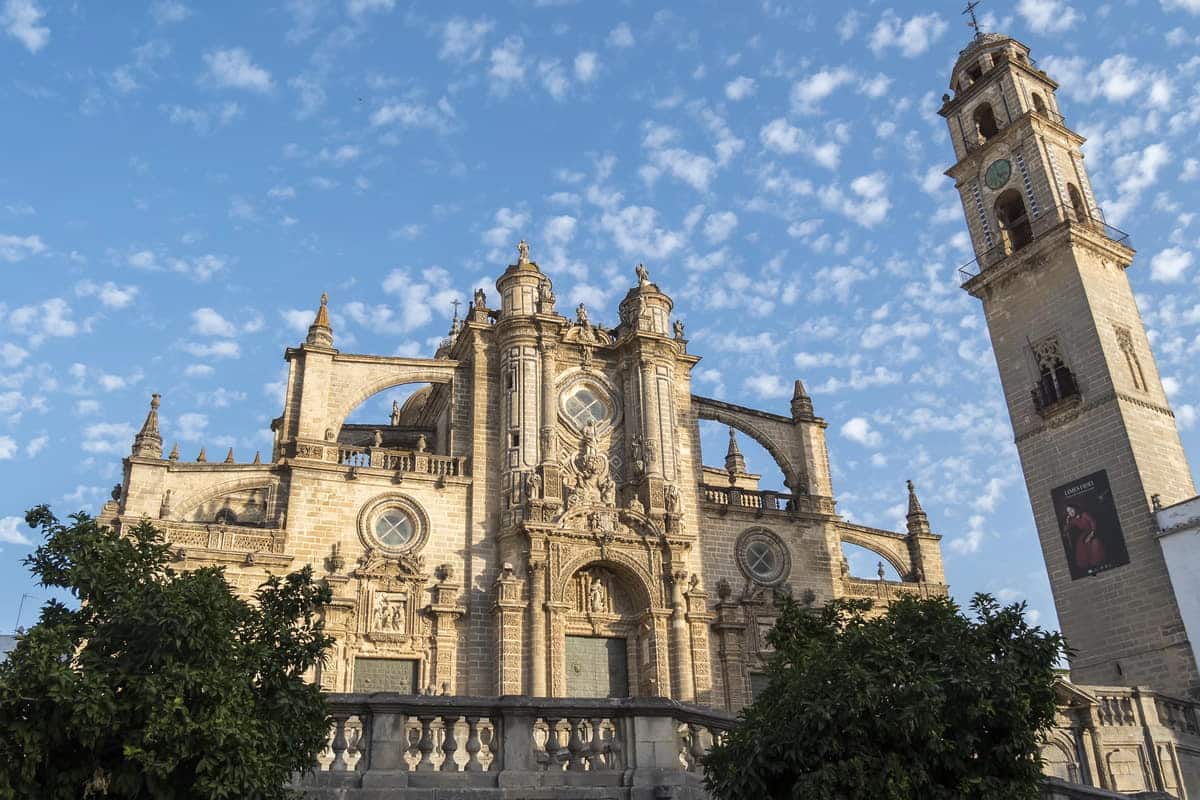
Inside, that mixture becomes more obvious in the scale of the nave, the chapels and the decorative details. The building feels more monumental than many of the churches scattered through the old centre, which is one reason it stands out as a separate stop rather than simply another church visit.
Its location also makes it easy to combine with the Alcázar and the historic bodegas nearby. Within a relatively small area, you move from Islamic Jerez to the later Christian city and then into the world of sherry, which makes this one of the clearest parts of Jerez for seeing how its different historical layers overlap.
5. Step inside Jerez’s historic palaces
Many of Jerez’s historic palaces are connected to the wealth created by wine, agriculture and trade, especially from the 18th century onwards. Noble families, landowners and merchants built or enlarged substantial houses in the historic centre, often incorporating older structures. This is why some palaces combine several architectural styles and periods within the same building. A number remain privately owned, while others can be visited today.
Domecq Palace (affiliate link) (Palacio Domecq) is perhaps the most famous palace in Jerez. It was built in the 18th-century for one of Jerez’s prominent families. Its formal rooms, decorative details and carefully preserved interiors give a clear sense of how the city’s wealthy families lived during the height of Jerez’s wine prosperity.
Viceroy Laserna Palace (affiliate link) (Palacio del Virrey Laserna) feels more personal. It is still connected to the family that has occupied it for generations, and the visit moves through furnished rooms, family collections and historic interiors rather than presenting the building as a conventional museum. Tickets can normally be bought at reception, so advance booking is useful for convenience rather than because access is especially limited.
Campo Real Palace (Palacio de Campo Real) dates back to the early 16th century and combines Renaissance and Mudéjar elements with historic furniture, tapestries and paintings. It also contains what is considered the oldest bodega in Jerez. The palace remains privately owned and is not open to visitors every day, so check current access arrangements before planning a visit.
6. Experience Jerez’s flamenco culture
Flamenco is deeply rooted in Jerez, especially in the neighbourhoods of Santiago and San Miguel, which have produced generations of singers, dancers and guitarists. The city is particularly associated with bulería, a fast and rhythmically complex flamenco form that developed strong local traditions in Jerez.

One of the most characteristic places to encounter this culture is the tabanco, a traditional wine bar where sherry is served alongside simple food and, in some cases, live flamenco. These places are part of everyday social life as much as they are part of the city’s flamenco identity, which makes them very different from a formal staged performance.
Jerez is also the birthplace of Lola Flores, one of Spain’s most influential 20th-century performers. The Lola Flores Cultural Centre (Centro Cultural Lola Flores) explores her career through more than 200 objects from her personal and professional archive, including costumes, jewellery, recordings and film material.
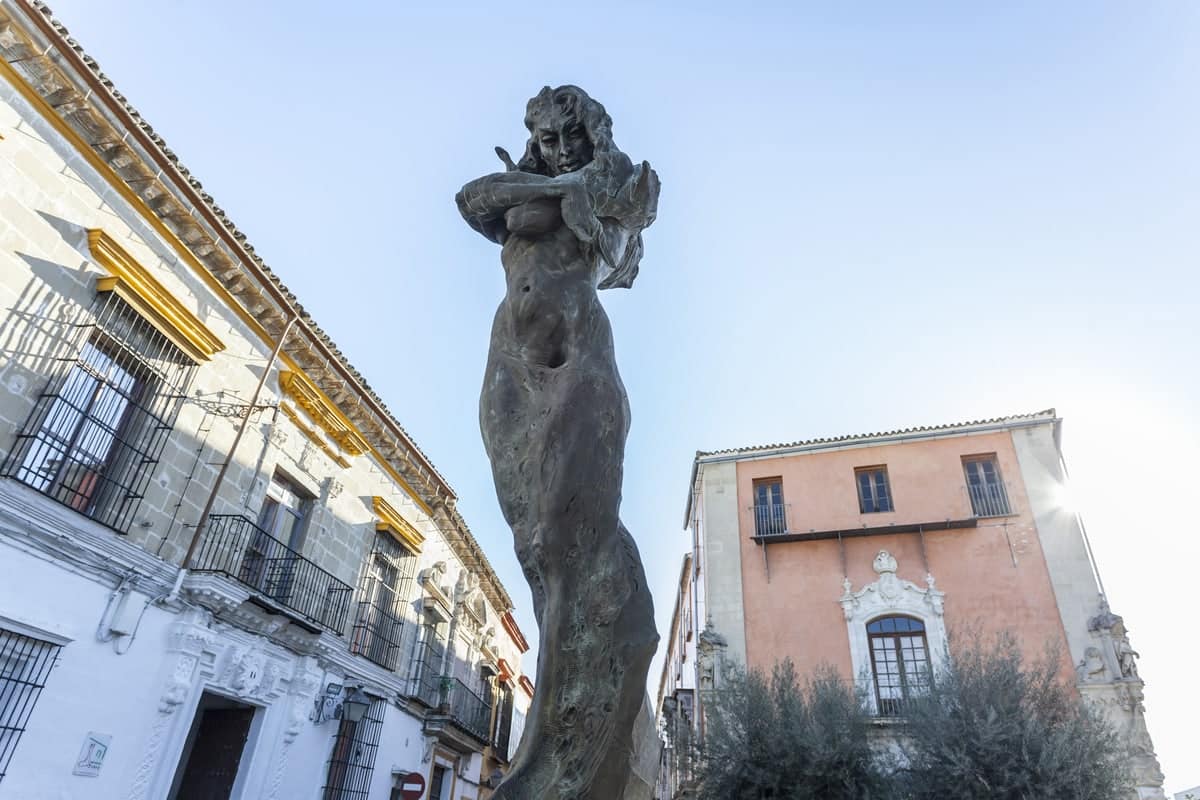
For a broader look at flamenco history, Pemartín Palace (Palacio Pemartín) houses the Andalusian Centre for Flamenco Documentation (Centro Andaluz de Documentación del Flamenco). Its collections include recordings, photographs, publications and archival material documenting the development of flamenco in Andalusia.
7. Walk through the historic centre
The historic centre of Jerez brings several centuries of the city’s history together within a relatively small area. The character changes noticeably from one square to the next, which makes the centre much more interesting than a collection of individual monuments.

Around Arenal Square (Plaza del Arenal) and the Alameda Vieja promenade (Alameda Vieja) beside the Alcázar, the scale is broad and monumental. The Alcázar of Jerez (Alcázar de Jerez), Jerez Cathedral (Catedral de Jerez) and the Tío Pepe bodega complex all sit close together here.
A short distance away, Market Square (Plaza del Mercado) has a different character. The square stands on the site of the former Arab zoco, or marketplace, and this part of Jerez still preserves stronger traces of the medieval city. The Jerez Archaeological Museum (Museo Arqueológico de Jerez) occupies one side of the square, while Riquelme Palace (Palacio Riquelme), the Church of San Mateo (Iglesia de San Mateo) and Bodegas Tradición are all nearby.
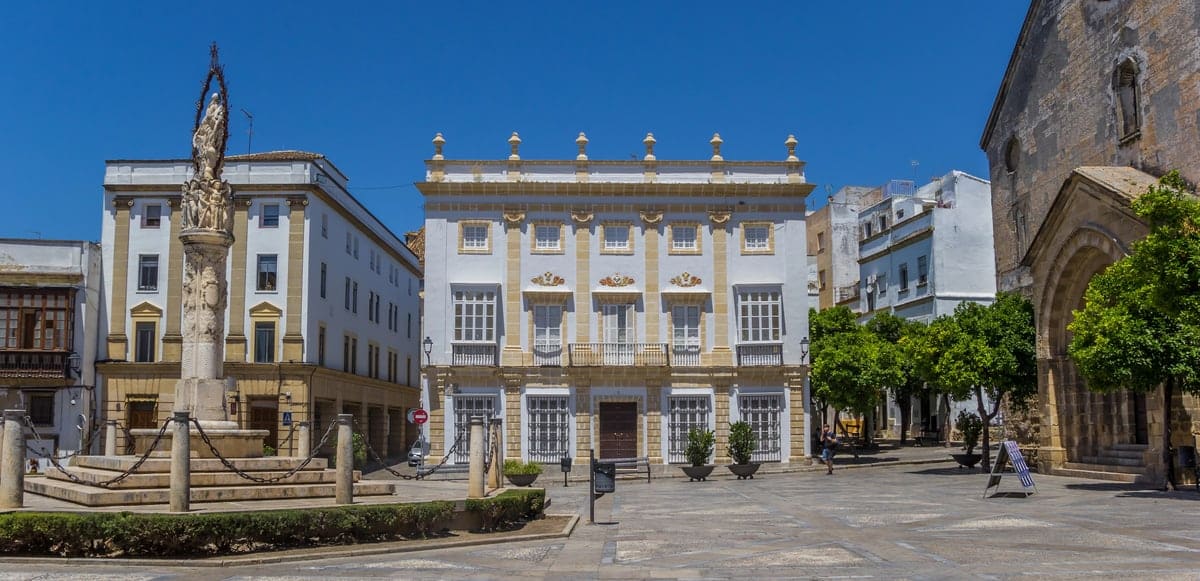
Other squares preserve more specific pieces of the city’s past. Silversmiths’ Square (Plaza Plateros) takes its name from the silversmiths who once worked in the area, while neighbouring Assumption Square (Plaza de la Asunción) brings together the Gothic-Mudéjar Church of San Dionisio (Iglesia de San Dionisio) and the Renaissance Old Town Hall (Cabildo Viejo).
8. Taste the culinary side of Jerez
Jerez has a strong culinary identity rooted in local produce, vineyard culture and the cooking of western Andalusia. Traditional dishes are often hearty and built around vegetables, beans, chickpeas, meat and sherry.
Berza jerezana is one of the most typical local dishes, a substantial stew made with beans or chickpeas, vegetables and meat. Riñones al jerez uses sherry in the sauce, while cola de toro, chicharrones and ajo de viña also appear regularly on local menus. For dessert, tocino de cielo is one of the classics.

Sherry is part of the food culture rather than something separate from it. Dry styles such as fino are commonly served with tapas, seafood and cured meats, while richer and sweeter sherries suit very different dishes and desserts.

The tabancos are one of the most characteristic places to experience this combination of food and wine. These traditional bars serve sherry alongside simple dishes and tapas, and some also have live flamenco. What a better way to discover the local tapas culture than join a tapas tour in Jerez (affiliate link)?
Jerez was named Spanish Capital of Gastronomy 2026, giving national recognition to a food culture that is already deeply rooted in the city.
9. Discover Jerez through its museums
The museums in Jerez fill in parts of the city’s story that you do not get from the bodegas, palaces and churches, especially its archaeological past and some of its more unusual collections.

The Jerez Archaeological Museum (Museo Arqueológico de Jerez) follows the history of the area from prehistory through the Roman and Islamic periods. Its best-known object is a 7th-century BC Corinthian Greek helmet discovered near the Guadalete River, an unusual reminder of how far back the region’s connections with the wider Mediterranean world extend.
For something completely different, visit the Palace of Time (Palacio del Tiempo). Its collection contains hundreds of historic clocks dating mainly from the 17th to the 19th centuries. The clocks are displayed in furnished period rooms rather than rows of conventional museum cases, which makes the experience feel closer to walking through a historic house.
The Cathedral Museum (Museo de la Catedral) focuses on religious art and objects connected with Jerez Cathedral, while the Nativity Museum (Museo del Belén) is dedicated to Spain’s strong nativity-scene tradition, with elaborate displays and figures from different makers and periods.
Practical tips for visiting Jerez
One full day is enough for the main highlights, but two days gives you more room for a bodega visit, the horse show, palaces and museums without rushing. The key is to plan around fixed-time experiences such as bodega tours and horse performances, and book those in advance when needed.
Most of the main sights in the historic centre lie close together, including the Alcázar, cathedral and several bodegas.
Summer temperatures can be intense. Use the morning and later afternoon for outdoor sightseeing, and leave museums, long lunches or indoor visits for the hottest part of the day.

Jerez also hosts major festivals and events throughout the year, which can affect opening hours, availability and how busy the centre becomes.
Jerez – A city with its own rhythm
Jerez has a way of feeling both grand and lived-in at the same time. Monumental churches, old palaces and enormous bodegas are part of the city, but so are shaded squares, neighbourhood bars and streets where everyday life carries on around them.
That contrast is a big part of its appeal. Jerez never feels like a place preserved only for visitors. Its traditions are still very visible, from the sherry poured in a tabanco to the horses trained at the Royal School and the flamenco that remains closely tied to particular neighbourhoods.
It is the kind of city that becomes more interesting the longer you stay, because its character is not concentrated in one landmark.